Rabbit Hill
Object NameSculpture
Artist / Maker
Deborah Masuoka
(American, b. 1957)
Date2005
MediumPainted Bronze
DimensionsEach: 51 x 42 x 15 in. (129.5 x 106.7 x 38.1 cm)
ClassificationsSculpture
Credit LineCommissioned by University Museums. An Iowa Art in State Buildings Project for Reiman Gardens. In the Art on Campus Collection, University Museums, Iowa State University, Ames, Iowa.
Object numberU2005.6abc
Status
On viewCollections
CultureAmerican
Label TextFrom the University Museums Collections Handbook, vol. 2, 2025:
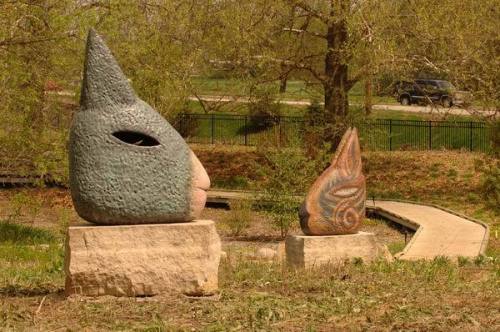
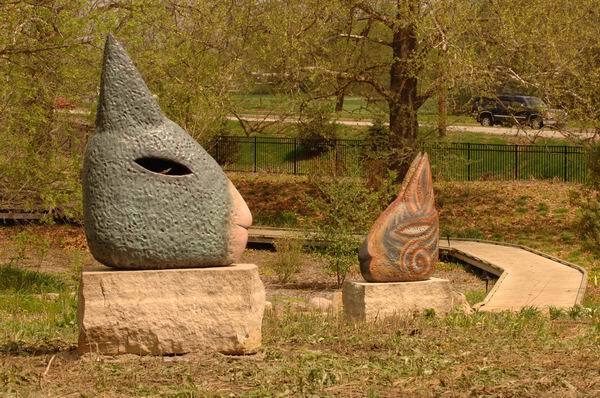
Frolicking rabbits are a joyous sight in a green space such as Reiman Gardens but can also be a menace with their voracious appetites causing destruction to plants. The artist Deborah Masuoka captures this dual essence of mischievous rabbits with her sculptures of oversized rabbit heads, painted in vivid colors and with ominous narrow eyes.
Masuoka frequently includes these long-eared mammals in her work, often depicting just their heads for an element of surrealism. The larger-than-life scale of the sculptures and their installation as a group creates an immersive experience for viewers, creating the feeling of being surrounded by a warren of rabbits.
Rabbits are typically seen as prey animals, but by upscaling the sculptures to a monumental size, the creatures appear as a predator to the surrounding plant life and to people. The presence of these enormous rabbit heads also calls to mind the cohesiveness of a landscape, the creatures that live within an ecology, and how fragile this balance can be.
-----------------------------------------------------------------------------------------------------------------
Usually, rabbits are limited to a diet of low lying vegetation and greenery. Not here – these rabbits could eat you. The massive size of the three permanent residents of Reiman Gardens is their “genius,” said Lynette Pohlman, director and chief curator of University Museums. Each sculpture weighs 150 pounds and is several feet tall – and that’s just the head poking up out of the ground. The typical prey becomes the predator.
Each head is two faced, with one menacing eye regarding its visitors and painted earth tones that are just a bit too bright. This explores the contrast between how we typically see rabbits (as soft, vulnerable creatures) and as they really can be (ravenous garden predators, capable of causing a garden‘s destruction). This is not unlike the dual nature of Reiman Gardens, which celebrate both the natural Iowa landscape and the hybrids so commonly created in the research laboratories of Iowa State.
The rabbits stand solitary and quiet in the far reaches of Reiman Gardens, both attracting people in to the prairie that was once less traveled, and repelling them away. The initial reaction to the menacing creatures was not overwhelmingly positive, but visitors have since grown to appreciate the predatory guardians.
“Once explored, the sculptures embrace deeper issues such as vulnerability, security, intimidation, and protection,” Deborah Masuoka wrote in her artist statement. By limiting the amount of visual information presented in the simplified heads, Masouka frees the viewer to make their own interpretation of the sculptures.
---------------------------------------
Locations
- (not entered) Iowa State University, Reiman Gardens
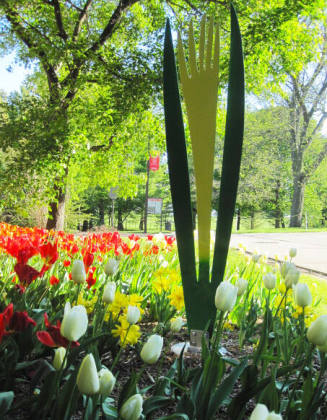
Object Name: Portrait Bust
Christian Petersen
1936
Object number: U90.63
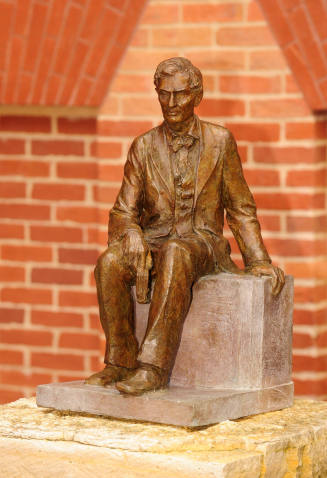
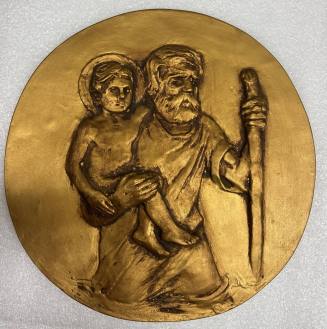
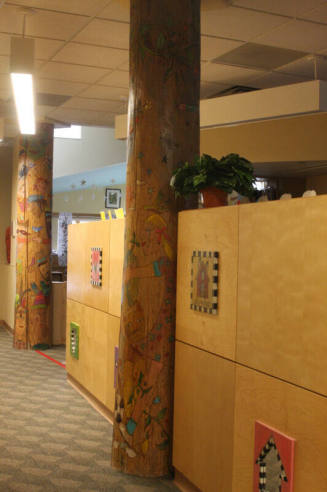
Object Name: Columns
Sarah Grant
1996-1997
Object number: U97.151abcd
Object Name: Match Holder / Novelty
1870-1880
Object number: UM2016.882
Object Name: Sculpture
Christian Petersen
1961
Object number: UM2024.157