
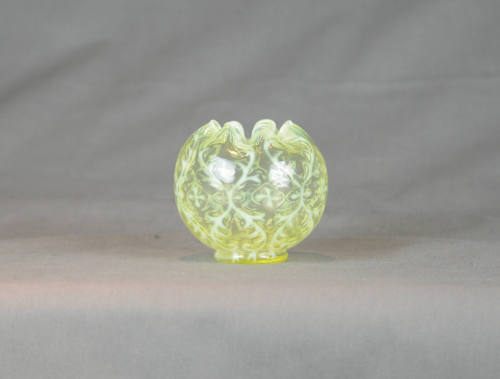
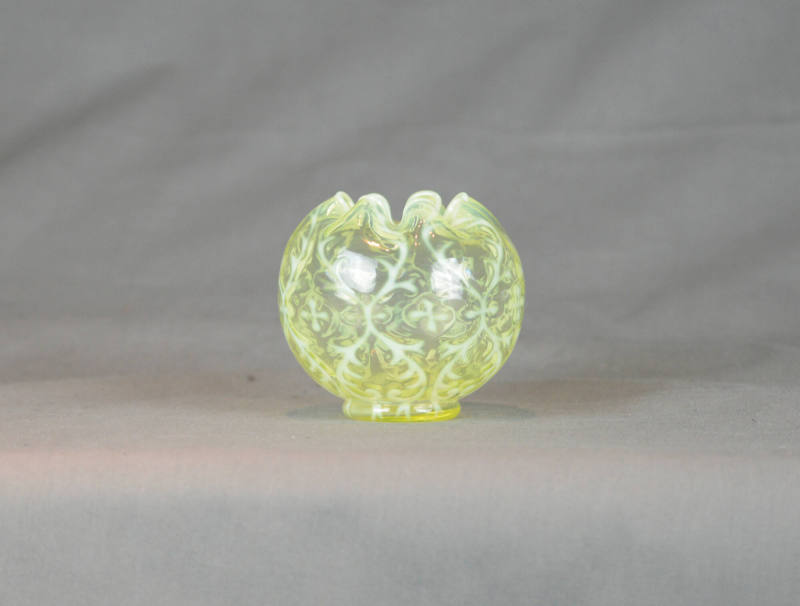
Brocade pattern
Object NameRose Bowl
Manufacturer
Northwood Glass Company
(American (Wheeling, WV), 1902 - 1924)
Date1897-1910
MediumPressed glass, vaseline with white
Dimensions4 x 4 1/4 x 4 1/4 in. (10.2 x 10.8 x 10.8 cm)
ClassificationsDecorative Arts, Glass
Credit LineGift of Quester Chapter Love's Cabin #1140 in Manchester, IA. In the Iowa Quester Glass Collection, Brunnier Art Museum, University Museums, Iowa State University, Ames, Iowa.
Object numberUM2009.54
Status
On viewCollections
CultureAmerican
Label TextVictorian vaseline glass marked a notable innovation in 19th-century glassmaking by blending scientific experimentation with decorative appeal. Glassmakers created vaseline glass by adding small amounts of uranium oxide to molten glass, producing its distinctive yellow-green color and its remarkable ability to glow under ultraviolet light. Although Victorians did not fully understand this phenomenon, they found it deeply fascinating. Manufacturers shaped the material into tableware, vases, oil lamps, and decorative novelties, reflecting the era’s enthusiasm for chemistry, novelty, and visual spectacle. The Northwood Glass Company, founded by English immigrant Harry Northwood, produced these objects and emerged as a major American glass manufacturer between 1887 and 1925, later gaining fame for pioneering carnival glass with its vibrant iridescent colors.
The development of vaseline glass also demonstrates how Victorian industry merged modern science with mass production. Advances in pressed-glass techniques allowed manufacturers to produce luminous objects at affordable prices, making them accessible to middle-class households while maintaining an exotic and refined appearance. Displayed in parlors and cabinets, vaseline glass embodied Victorian optimism about progress and innovation by transforming cutting-edge materials into everyday art. Vaseline glass reached peak popularity between the 1880s and 1920s, before production declined due to uranium regulations. Today, collectors prize vaseline glass both for its technological curiosity—its fluorescence under ultraviolet light—and as a symbol of the era’s inventive spirit.
https://glassencyclopedia.com/Northwoodglass.html
Heacock, William. Harry Northwood, the Early Years 1881-1900, 1999.
Locations
- (not entered) Iowa State University, Farm House Museum
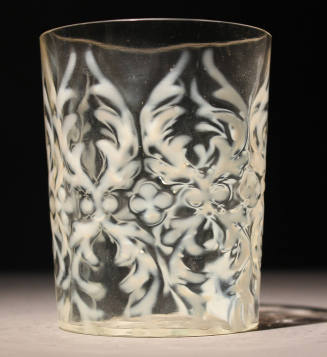
Object Name: Tumbler
Northwood Glass Company
1899-1910
Object number: UM2013.389
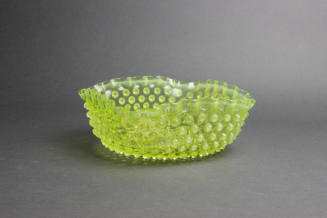
Object Name: Bowl
Hobbs, Brockunier & Co.
c. 1886
Object number: UM2016.570
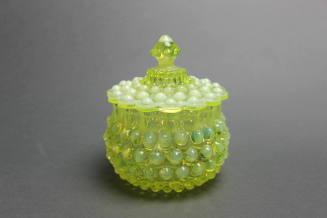
Object Name: Sugar Bowl with lid
Hobbs, Brockunier & Co.
c. 1886
Object number: UM2016.571ab
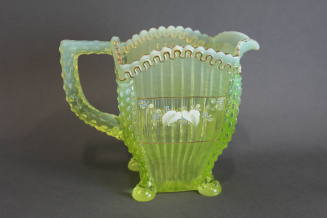
Object Name: Water Pitcher
Northwood Glass Company
1897
Object number: UM2021.190
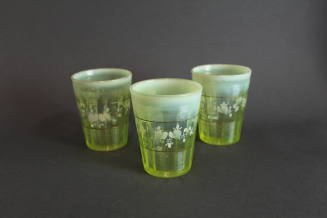
Object Name: Tumblers (6)
Northwood Glass Company
1897
Object number: UM2021.191a-f
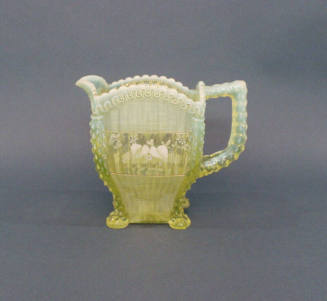

Object Name: Creamer
Hobbs, Brockunier & Co.
c. 1886
Object number: UM2016.567
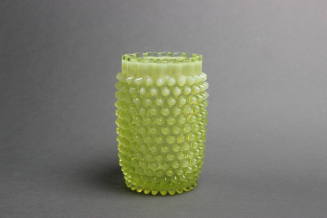
Object Name: Celery Vase
Hobbs, Brockunier & Co.
c. 1886
Object number: UM2016.568
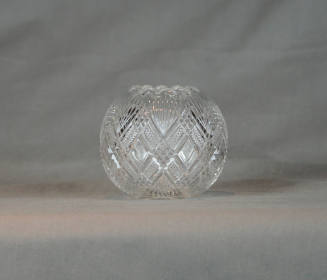

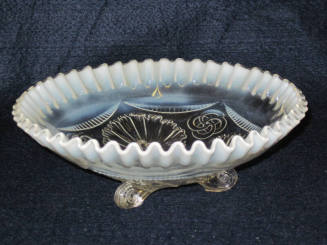
Object Name: Pitcher
Cooperative Flint Glass Co.
1886-1887
Object number: UM2004.18
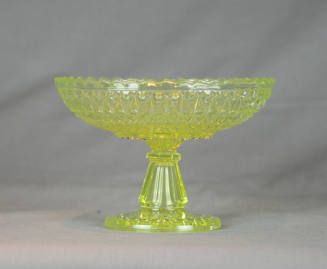
Object Name: Compote
Central Glass Company
1885-1891
Object number: UM2008.617