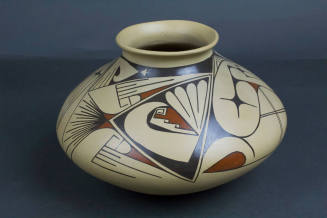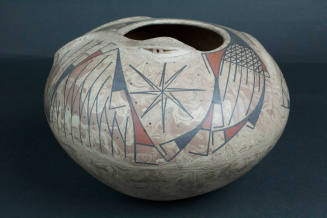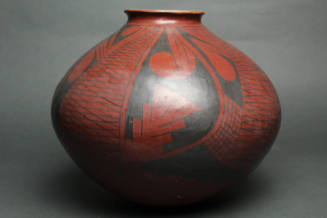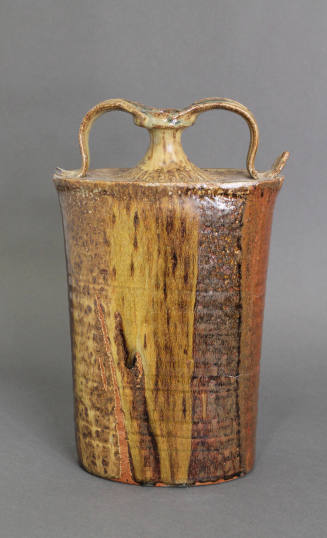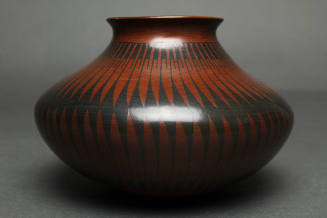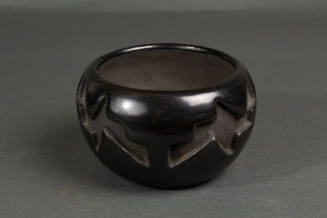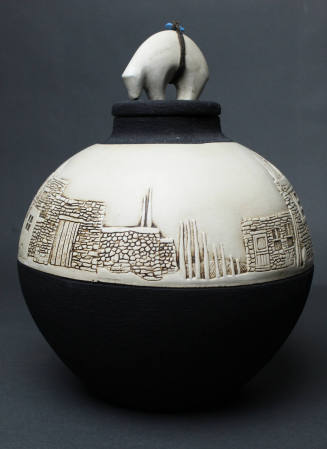
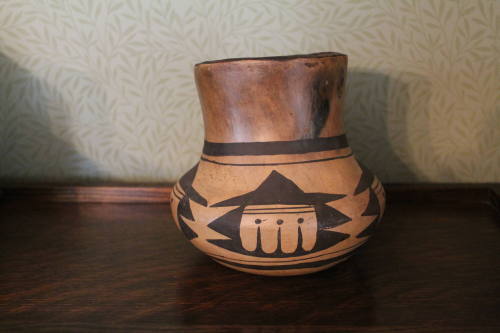

Pot / Vessel
Object NamePot / Vessel
Mediumearthenware
ClassificationsDecorative Arts, Ceramics
Credit LineTransferred from the Applied Art Department. In the Farm House Museum Collection, Farm House Museum, University Museums, Iowa State University, Ames, Iowa.
Object number74.32.104
Status
On viewCultureNative American - Zia
Label TextIn the early 1900s, Hopi pottery attracted increasing attention from collectors, anthropologists, and tourists as interest grew in Native American art of the American Southwest. Hopi potters, often women, produced finely crafted vessels using traditional hand-coiling techniques, natural pigments, and distinctive painted designs that reflected cultural stories, ceremonial life, and connections to the natural world. Collectors valued these objects for their beauty and perceived authenticity, and trading posts and museums played a major role in shaping demand. While this attention helped bring wider recognition and economic opportunity to Hopi artists, it also influenced production styles and raised concerns about cultural appropriation and the loss of context, issues that continue to shape discussions of Native American art and collecting today.
Barber, Edwin A. “Pueblo Pottery.” The American Naturalist 15, no. 6 (1881): 453–62. http://www.jstor.org/stable/2463964.
Locations
- (not entered) Iowa State University, Farm House Museum, Library
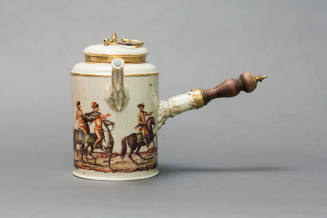
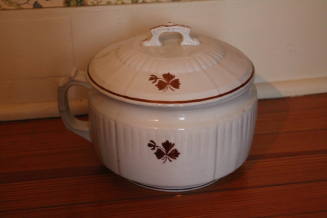
Object Name: Chocolate Pot and Lid
Franz Ferdinand Mayer
c. 1750*
Object number: 2.6.29ab