
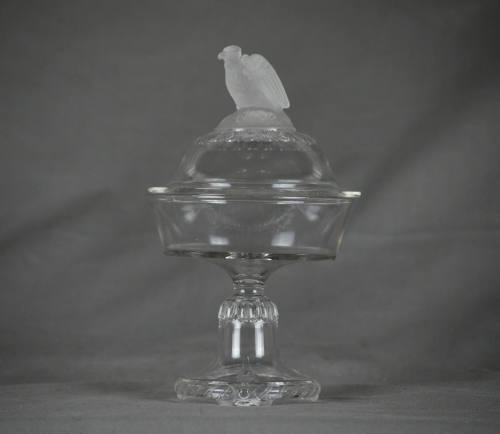
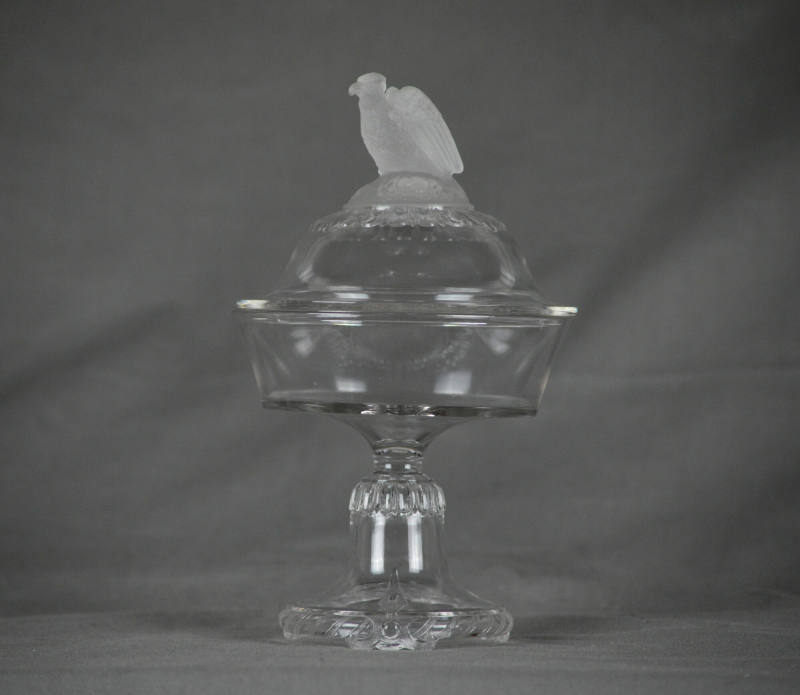
Frosted Eagle (AKA: Frosted Hawk, Old Abe)
Object NameCompote
Manufacturer
Ripley & Co.
(American (Pittsburgh, PA), 1866 - 1891)
Date1883
MediumNon-flint clear and frosted pressed glass
Dimensions10 × 6 1/4 × 6 1/4 in. (25.4 × 15.9 × 15.9 cm)
Compote: 6 × 6 1/8 × 6 1/8 in. (15.2 × 15.6 × 15.6 cm)
Lid: 4 1/2 × 6 1/4 × 6 1/4 in. (11.4 × 15.9 × 15.9 cm)
ClassificationsDecorative Arts, Glass
Credit LineGift of Jacquelyn, member of #871 Captain Greeley Quester, and Ronald Smith. In the Iowa Quester Glass Collection, Brunnier Art Museum, University Museums, Iowa State University, Ames, Iowa.
Object numberUM2016.903ab
Status
On viewCollections
CultureAmerican
Label TextThe bald eagle is one of the most recognizable symbols of the United States, with its origins as a national emblem dating back to the country’s founding. First appearing in 1782 as part of the Great Seal of the United States, the bald eagle quickly came to represent the nation as a whole. Its adoption, however, was not without controversy. Benjamin Franklin famously opposed the choice, writing that the bald eagle is “a bird of bad moral character; like those among men who live by sharping and robbing” and instead felt that the turkey would be a better national symbol as it was “a much more respectable bird and withal a true, original native of America.” Despite Franklin’s objections, the bald eagle was embraced as a national symbol due to it being seen as a symbol of strength, courage, and freedom for generations. As a bird native to North America, it was also seen as uniquely American. Over time, the bald eagle has surpassed earlier national symbols such as Columbia and even Uncle Sam to become the de facto symbol of the United States, only being rivaled by Lady Liberty. Its image continues to be featured on countless decorative and patriotic items such as cup plates, textiles, glass tableware, and the kerosene lamp chimney, serving as a proud emblem of the United States of America.
https://www.va.gov/opa/publications/celebrate/eagle.pdf
Locations
- (not entered) Iowa State University, Farm House Museum
Object Name: Bowl with Lid, Comport
Central Glass Company
1882-1885
Object number: UM2005.333ab
Object Name: Spoon Holder (Spooner)
Adams & Company
1887
Object number: UM2000.75

Object Name: Compote
Bakewell, Pears & Company
1870-1882
Object number: UM2005.74
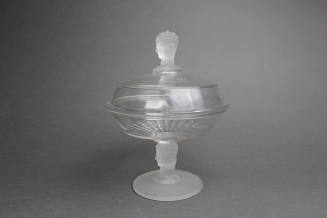
Object Name: Compote, covered
George Duncan and Sons
1878
Object number: UM2016.905ab
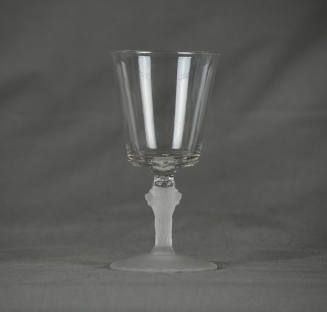
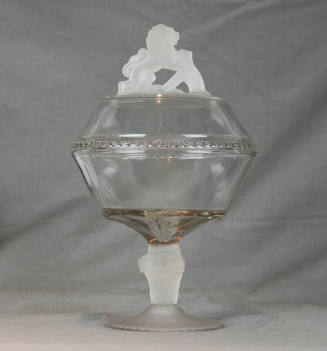
Object Name: Covered Compote
Gillinder & Sons
c. 1877
Object number: UM2005.320ab

Object Name: High Standard Compote with Lid and Four Footed Sauce Dishes
Gillinder & Sons
c. 1870
Object number: UM2005.324a-f
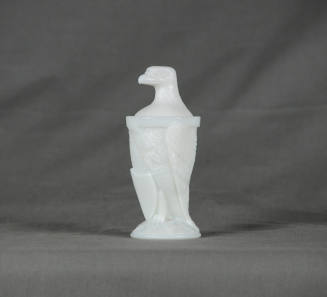
Object Name: Mustard Jar with Lid
Eagle Glass & Manufacturing Company
1898
Object number: UM2004.39ab
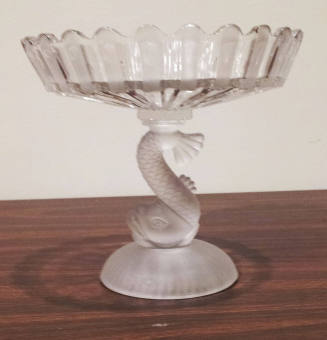
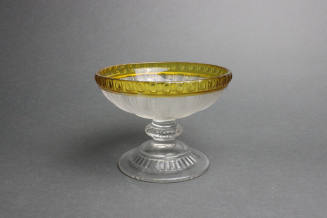
Object Name: Compote
George Duncan and Sons
1887-1890
Object number: UM2016.833
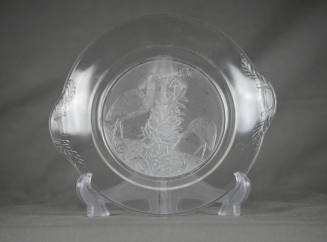
Object Name: Plate
Crystal Glass Company
1870s
Object number: UM2011.226