
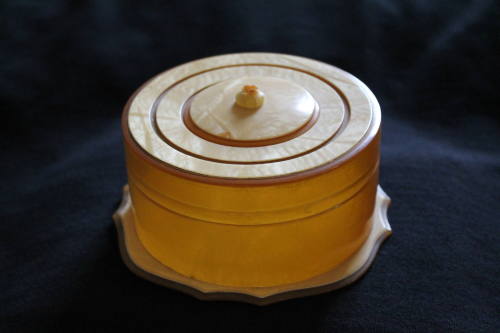

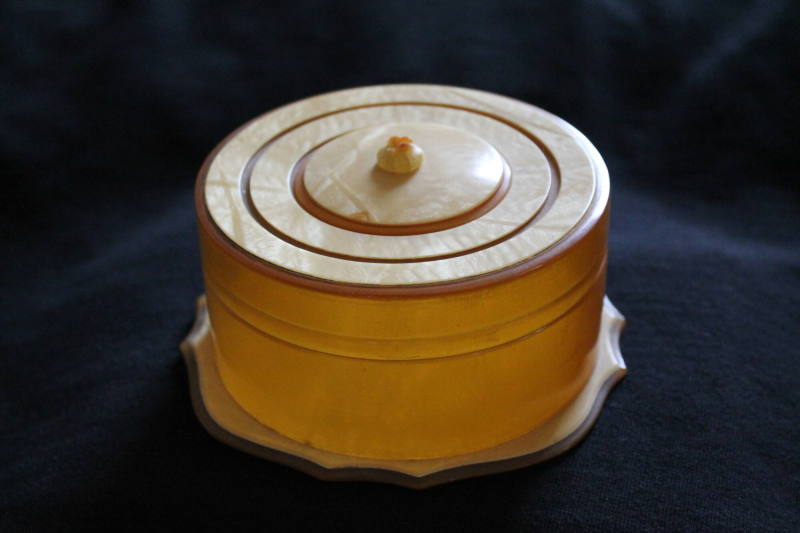
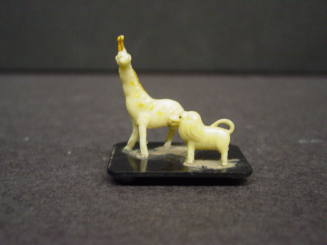
Dresser Set
Object NameDresser Set
Date1900-1927
MediumCelluloid
ClassificationsDecorative Arts, Other
Credit LineGift of Mary Barton. In the Farm House Museum Collection, Farm House Museum, University Museums, Iowa State University, Ames, Iowa.
Object number75.10.6ab
Status
On viewCollections
Label TextCelluloid, the first practical synthetic plastic, emerged in the mid-19th century as an affordable substitute for natural materials such as ivory and tortoiseshell. In the 1860s, American inventor John Wesley Hyatt refined earlier experiments with nitrocellulose by combining it with camphor, creating a moldable, durable material suitable for mass production. More than forty years passed before chemists developed the first wholly synthetic plastic. Celluloid quickly gained widespread use in combs, eyeglass frames, toys, and photographic film, including motion-picture stock, and it played a critical role in the early photography and film industries. Despite its versatility, celluloid posed serious safety risks because it was highly flammable and chemically unstable, leading manufacturers to replace it with safer plastics in the 20th century. Even so, celluloid remains historically significant as the foundation of the modern plastics industry.
Bakelite soon followed as a major advancement in synthetic materials. In 1906, BelgianAmerican chemist Leo Hendrik Baekeland (1863–1944) received his first patent for Bakelite, the world’s first fully synthetic plastic. Over his career, Baekeland secured more than 400 patents related to its manufacture and use. He began semi-commercial production in his laboratory and, in 1910, founded a U.S. company to manufacture and market the new industrial material. By 1930, the Bakelite Corporation operated a 128-acre manufacturing complex in Bound Brook, New Jersey, marking the material’s widespread industrial success.
https://www.acs.org/education/whatischemistry/landmarks/bakelite.html
Locations
- (not entered) Iowa State University, Farm House Museum
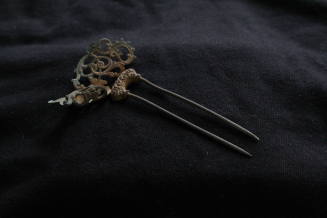
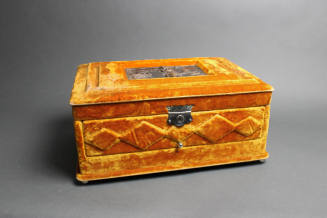
Object Name: Fitted Dresser Case / Vanity Set
late 19th Century
Object number: UM2016.562a-n

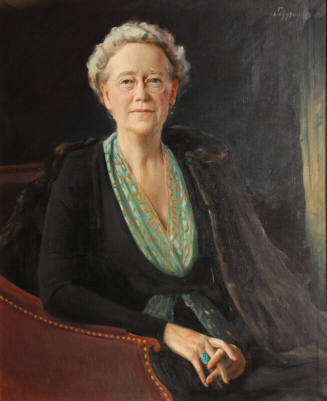
Object Name: Portrait
Frank I. Johnson
1943
Object number: U82.126

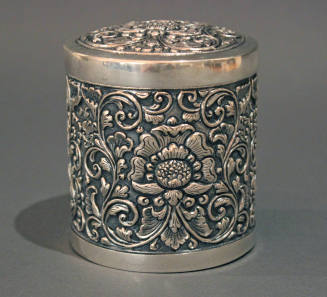
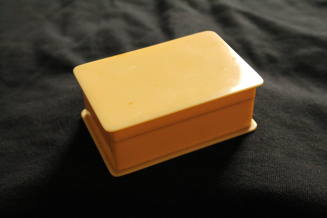
Object Name: Dresser Container or Tea Caddy
Object number: UM2008.630ab