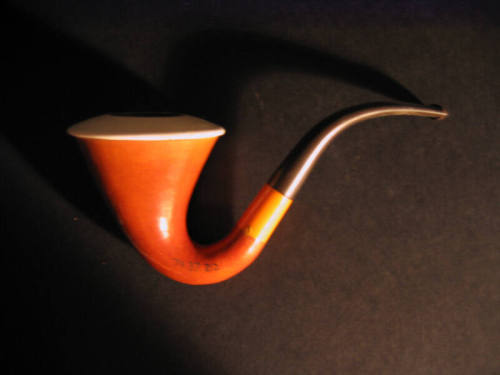
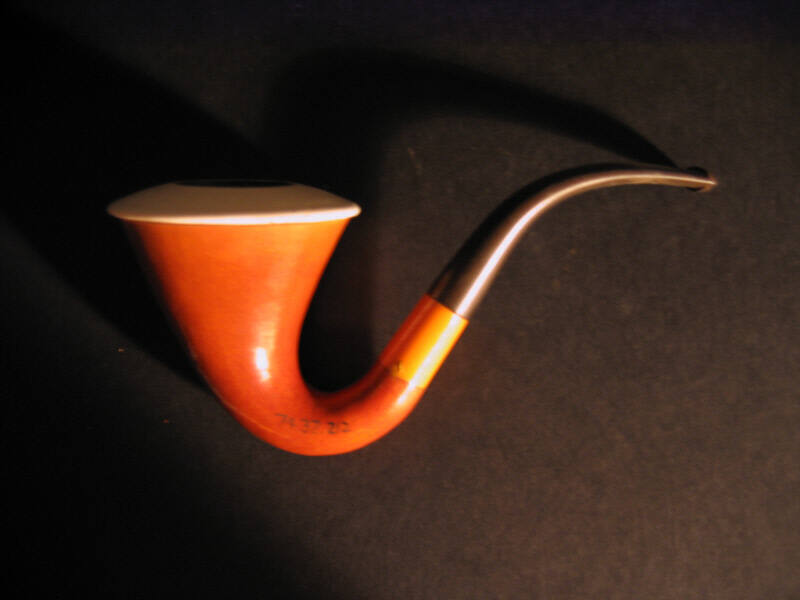
Pipe
Object NamePipe
MediumCalabash gourd, meerschaum
Dimensions2 3/4 × 6 1/2 in. (7 × 16.5 cm)
ClassificationsDecorative Arts, Natural Substances
Credit LineTransferred from the Applied Arts Department. In the Farm House Museum Collection, Farm House Museum, University Museums, Iowa State University, Ames, Iowa.
Object number74.32.212
Status
On viewCollections
Label TextAs national smoking rates in the United States have steadily declined over the past several decades, it can be easy to forget how prominent tobacco once was in American life. While cigarettes dominate conversations about smoking today, in the Victorian era the tobacco pipe was the preferred method of consumption, serving both as a poor personal habit and a social ritual. Pipes appeared in a wide variety of forms throughout the 17th and 18th centuries, but by the 19th century their design became more standardized, often shaped to accommodate the full beards fashionable at the time. Many middle-class men smoked plain, utilitarian examples such as this one of a calabash pipe, a type of tobacco pipe known for its unique design and smoking properties. The pipe shape is derived from the dried calabash gourd, which forms the curved, bulbous base. It features a separate bowl, often made of meerschaum, inserted into the top. The design includes a condensation chamber in the base which helps cool and dry the smoke, enhancing the flavor. This style is famously associated with Sherlock Holmes. Despite their cultural significance, pipes carried the same health risks we now associate with smoking such as lung cancer, and by the First World War they were largely supplanted by the much smaller cigarette.
https://www.antiquetrader.com/collectibles/antique-tobacco-pipes https://www.nps.gov/fopu/learn/historyculture/pipes.htm
Locations
- (not entered) Iowa State University, Farm House Museum


Object Name: Printing Plate
Jay Norwood Darling
Object number: UM2006.80