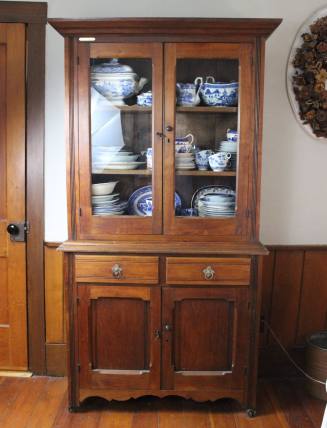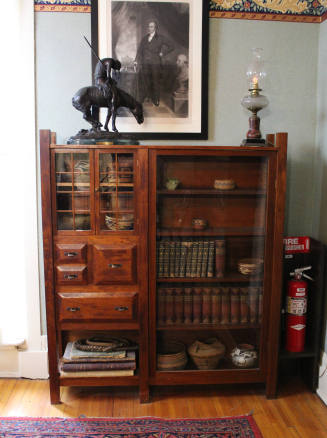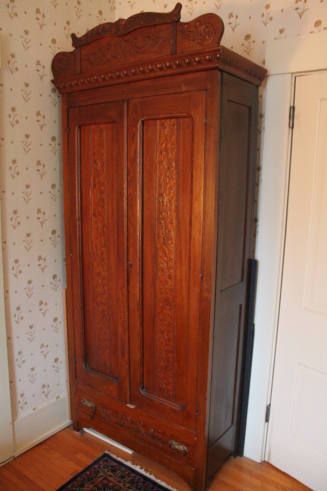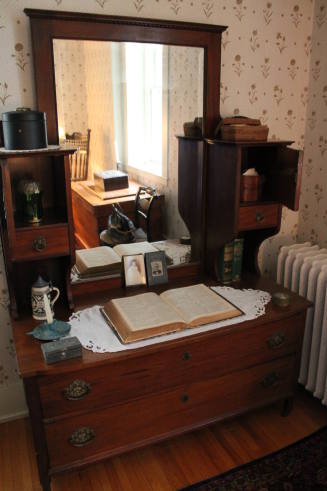
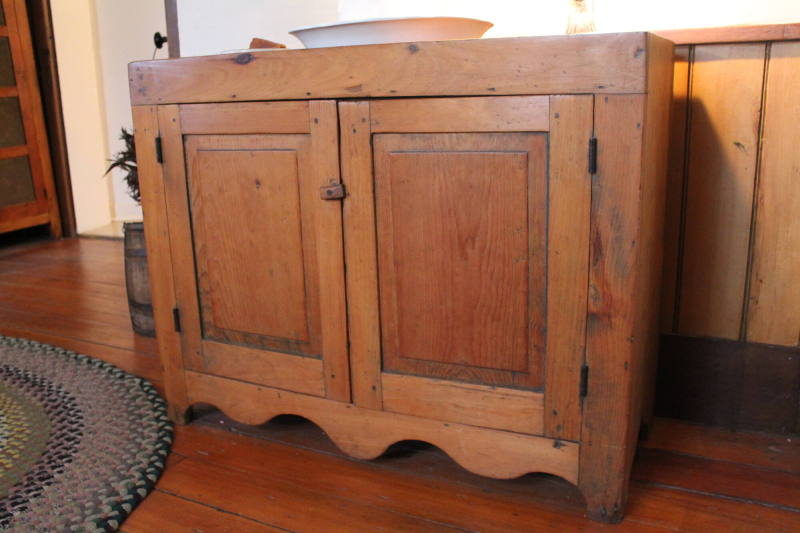
Dry Sink
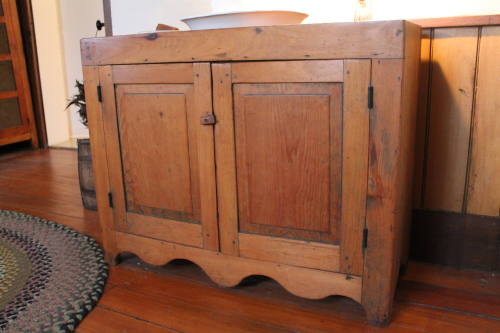
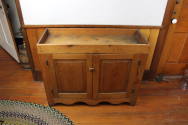
Object NameDry Sink
MediumWood, likely Pine
Dimensions31 1/2 × 39 × 15 1/2 in. (80 × 99.1 × 39.4 cm)
ClassificationsFurniture
Credit LineGift of the Quester Chapter Margaret Stanton #207. In the Farm House Museum Collection, Farm House Museum, University Museums, Iowa State University, Ames, Iowa.
Object number76.11.1
Status
On viewCollections
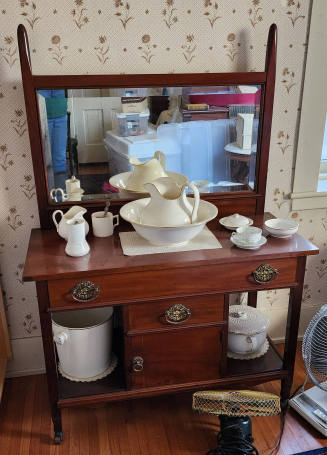
Label TextThe dry sink, popular in 19th-century America, emerged as a practical solution for washing and storage before indoor plumbing became widespread. Unlike a full sink, the dry sink lacked running water; instead, it provided a shallow basin or space for a removable washbasin, along with cupboards or drawers to store towels, soap, and other washing supplies. Its compact design made it ideal for kitchens, dining rooms, or bedrooms, and households used it to carry out daily washing tasks efficiently.
During the Victorian era, dry sinks became especially common and reflected both functional and decorative trends in furniture design. Craftspeople often built them from hardwoods such as oak, walnut, or cherry, and many featured turned legs, carved panels, and sometimes marble tops that combined practicality with aesthetic appeal. As indoor plumbing spread in the late 19th and early 20th centuries, people gradually stopped using dry sinks and replaced them with modern sinks and cabinetry. Today, collectors value antique dry sinks like this example as furniture pieces that offer a glimpse into domestic life before the convenience of running water. https://www.thehenryford.org/collections-and-research/digital-collections/artifact/39829
Locations
- (not entered) Iowa State University, Farm House Museum

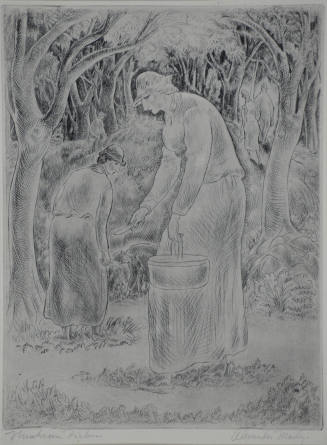
Object Name: Etching with dry point
Alexander Simeon Masley
1940
Object number: um94.57