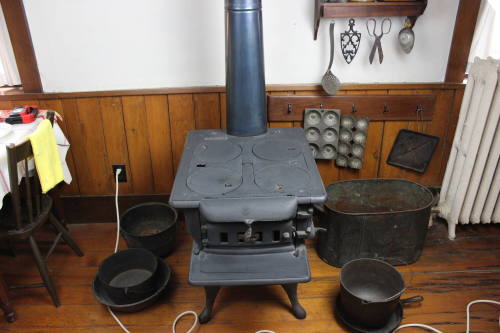

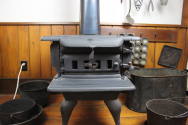

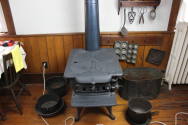
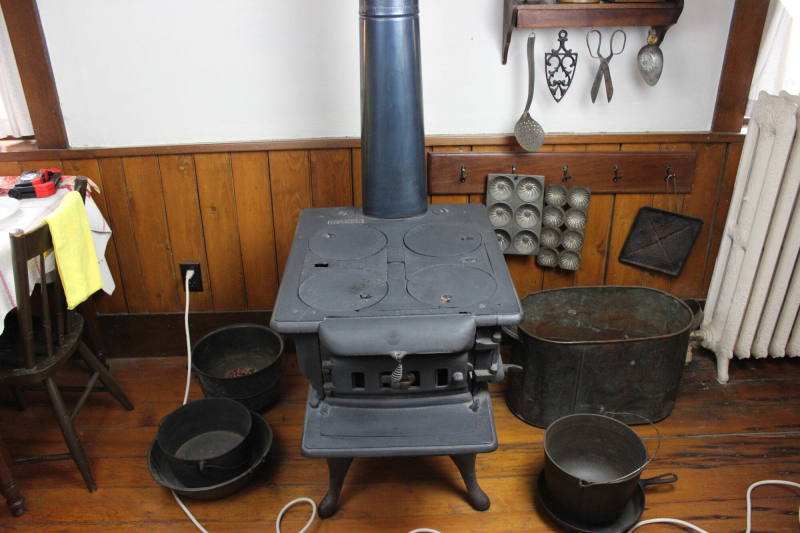
Stove
Object NameStove
MediumCast Iron
Dimensions80 × 22 × 40 in. (203.2 × 55.9 × 101.6 cm)
ClassificationsHousehold, Kitchen, Miscellaneous
Credit LineGift of William Minert in memory of Keo Anderson Minert. In the Farm House Museum Collection, Farm House Museum, University Museums, Iowa State University, Ames, Iowa.
Object number76.9.1
Status
On viewLabel TextBefore the advent of the gas or electric stove, wood and coal cast irons stoves were a common site in Victorian households. This specific example is a cook-stove model which meant that the cook could get closer to the action with minimal risk of getting burned. The design also made it easier to monitor the food being prepared and led to the introduction of shorter handled pots and pans, also made of cast iron.
In 1642, craftsmen in Lynn, Massachusetts, constructed the first cast-iron stove. This early stove consisted of little more than a simple cast-iron box and did not include grates. In 1742, Benjamin Franklin designed the “Pennsylvania fireplace,” now known as the Franklin stove, and introduced the fundamental principles of the modern heating stove. Around 1800, Count Rumford developed a cast-iron cooking oven known as the Rumford roaster, which builders incorporated into brick kitchen ranges. Approximately five years later, Isaac Orr of Philadelphia, Pennsylvania, created the first circular cast-iron cooking stoves equipped with grates. In 1834, Philo Stewart introduced the Oberlin Stove, a compact wood-burning cast-iron kitchen stove. This metal stove offered significantly greater efficiency than fireplace cooking because it produced more consistent heat and allowed for extended cooking times. The Oberlin Stove achieved major commercial success. Over time, these iron stoves evolved into specialized cooking appliances that included chimney flue pipes, oven compartments, and water-heating systems. Manufacturers replaced the original open pot holes with concentric iron rings that supported cookware. Cooks could remove the inner rings to accommodate different pot sizes or adjust the level of heat required.
Magazine, Smithsonian; Bramen, Lisa. “Cooking Through the Ages: A Timeline of Oven Inventions”. Smithsonian Magazine.
Harris, Howell J., “Inventing the U.S. Stove Industry, c. 1815–1875: Making and Selling the First Universal Consumer Durable,” Business History Review, 82 (Winter 2008), 701–33 Harris, Howell, “Coping with Competition: Cooperation and Collusion in the U.S. Stove Industry, c. 1870–1930”, Business History Review, 86 (Winter 2012), 657–692.
Locations
- (not entered) Iowa State University, Farm House Museum
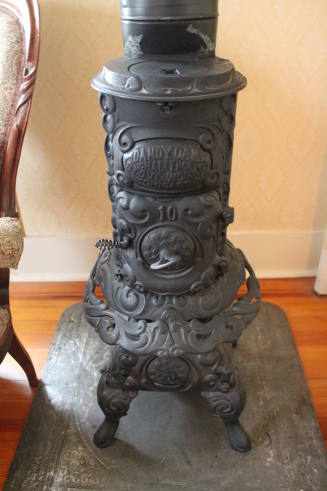
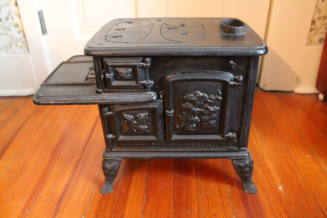
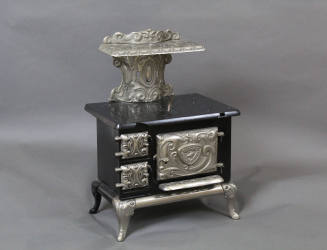
Object Name: Toy Stove / Salesman's Sample
Buck's Stoves & Ranges
c. 1900
Object number: 77.25.1
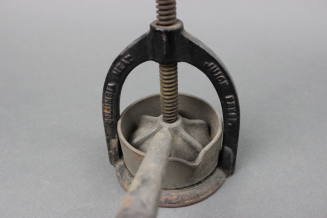
Object Name: Meat Juice Press
Landers, Frary & Clark
1862-1900
Object number: 77.4.18a-c