
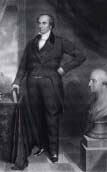
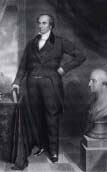
Daniel Webster
Object NameEngraving
Artist / Maker
Thomas Bayley Lawson
(Aamerican, 1807 - 1888)
PrinterEngraved by
Charles Edward Wagstaff (American, 1808-1850) and Joseph Andrews (American, 1805-1873)
Date1852
OriginUSA
MediumEngraving and Mezzotint
Dimensions26 × 17 3/4 in. (66 × 45.1 cm)
ClassificationsPrints and Printing Plates
Credit LineGift of Friends of Ruth Smith In memory of Ruth Smith. In the Farm House Museum Collection, Farm House Museum, University Museums, Iowa State University, Ames, Iowa.
Object number96.5.1
Status
On viewCollections
CultureAmerican
Label TextDaniel Webster became one of the most influential American statesmen of the early 19th century. A gifted lawyer and orator, he rose to prominence in New England before serving in the U.S. House of Representatives (1813–1817, 1823–1827) and the U.S. Senate (1827–1841, 1845–1850). As a senator, Webster fiercely defended the Union during the Nullification Crisis of 1832–33. In his famous exchange with Senator Robert Hayne of South Carolina, he declared, “It is, sir, the people’s Constitution, the people’s government, made for the people, made by the people, and answerable to the people.” Historians later celebrated his words as among the most powerful in American history, echoed decades later in Abraham Lincoln’s Gettysburg Address. Webster also served twice as Secretary of State under Presidents Harrison, Tyler, and Fillmore. During the Fillmore administration, he actively supported the Compromise of 1850, aiming to preserve peace between North and South. Critics heavily criticized his stance on this controversial issue, tarnishing his reputation by the time he died in 1852.
Although controversy surrounded him in the lead-up to the American Civil War, people widely celebrated Webster after the war’s conclusion. Americans remembered him as a steadfast defender of the Union and a masterful orator. Scholars compiled his speeches into volumes, and citizens honored his likeness in homes, schools, and institutions across the country, including by Dean Curtiss during his residency at the Farm House. Webster’s enduring legacy lies in how his words shaped the nation’s understanding of the Constitution, the Union, and the meaning of American democracy.
https://history.state.gov/departmenthistory/people/webster-daniel https://www.senate.gov/senators/FeaturedBios/Featured_Bio_Webster.htm https://archive.org/details/greatspeechesorat00webs/page/n7/mode/2up
MarkingsWritten in lower right hand corner, "Daniel Webster.". Right hand corner: painted by T.H. Lawson. Middle: Entered according to Act of Congress in the year 1852. By H. Williams Jr. & F.S. Williams in the Clerks Office of the District of Massachusetts. Right hand corner: Engraved by C.E. Wagstaff & Jos Andrews
Locations
- (not entered) Iowa State University, Farm House Museum, Library
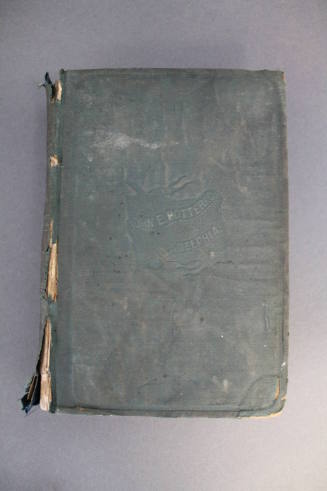
Object Name: Book
John E. Potter & Co.
c. 1852
Object number: 80.12.21
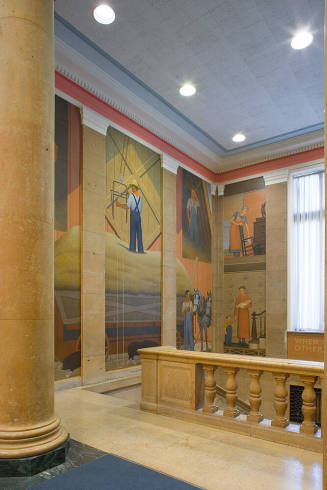
Object Name: Mural
Grant D. Wood
1934
Object number: U88.91a-i
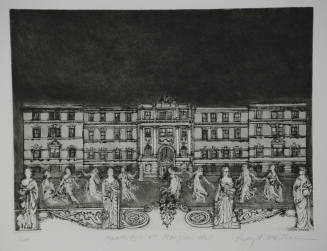
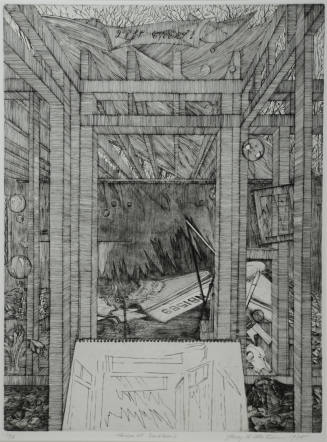
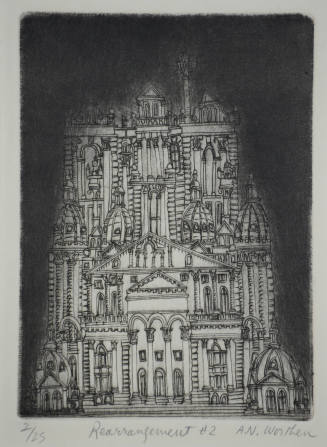
Object Name: Engraving and Portfolio
Amy Namowitz Worthen
2012
Object number: U2012.85a-d
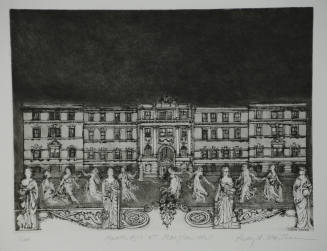
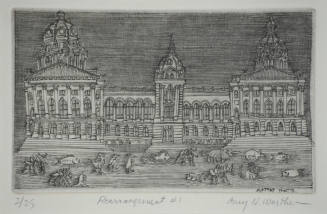

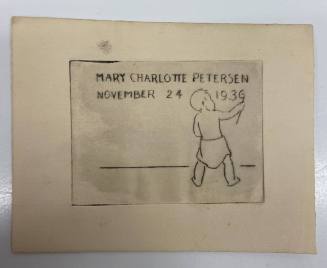
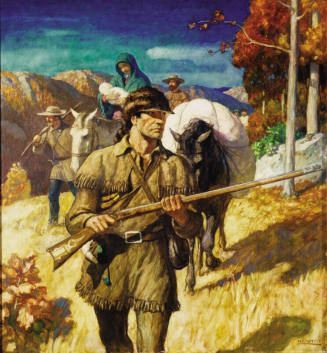
Object Name: Painting
Newell Convers Wyeth
1939
Object number: UM90.53