Peddler Doll
Object NamePeddler Doll
ClassificationsDolls, Doll Accessories, Toys and Games
Credit LineGift of John Pesek in memory of his wife Isabel Christensen Pesek. In the Farm House Museum Collection, Farm House Museum, University Museums, Iowa State University, Ames, Iowa.
Object number2004.1.6
Status
On viewCollections
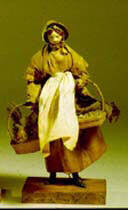
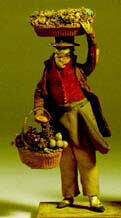
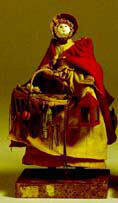
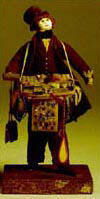
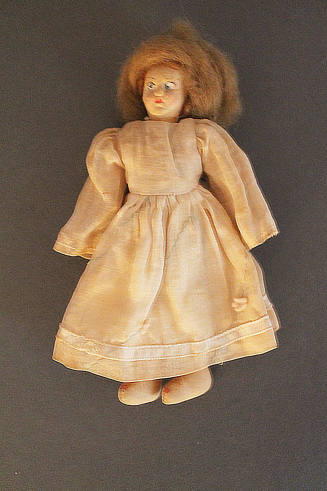
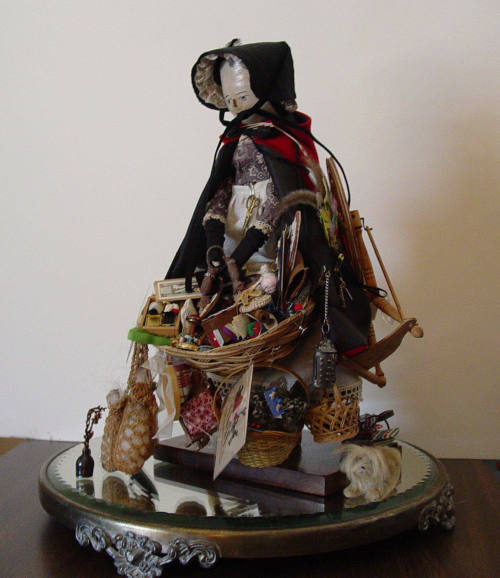
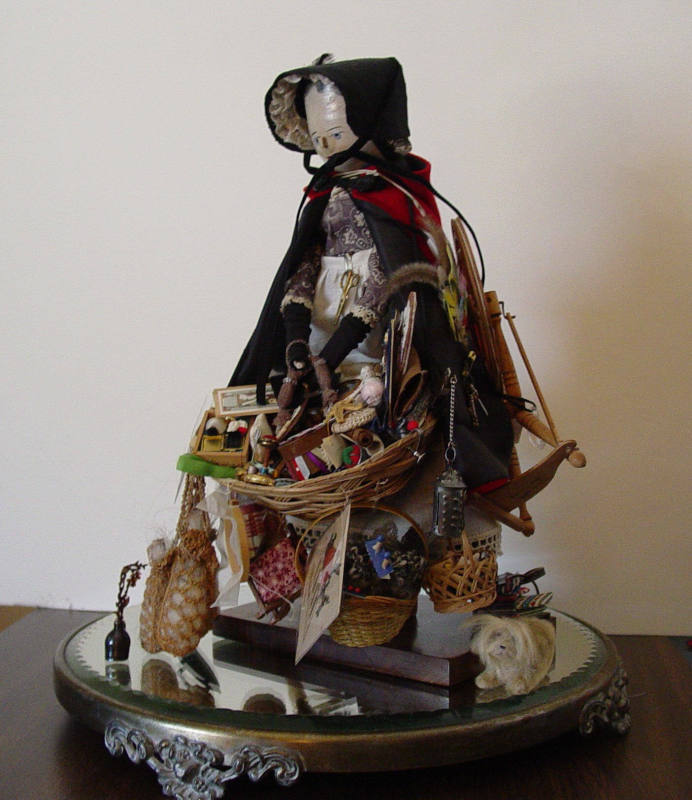
Label TextIn the Victorian Era, peddlers were door-to-door local salespeople who sold various consumer goods. For those without easy access to town markets or stores, peddlers bridged a gap and brought goods to different rural areas. These peddlers were also displayed in doll form. Female peddler dolls were dressed in the clothes typical of country women - a printed cotton dress, a woolen cape, and a black hood or bonnet over a white cap. These dolls were more of a curiosity than a children’s toy and were usually on display under a glass dome like this example.
Most 19th-century makers of peddler dolls began with a mass-produced, small figure made of wood, papier mache, leather, or china and added the handmade red cloak, black bonnet, white lace cap, calico dress, and apron of the traditional "notion nannies." The fun of making the peddler doll was in crafting the dozens (sometimes hundreds) of tiny notions, buttons, fabrics, laces, ribbons, and pots and pans that the peddler offered for sale. Peddler dolls display their merchandise on large trays hung from a strap around their necks, in baskets on their arms, or in larger bins displayed at their feet and protected by a glass dome. This doll is very complex and features miniature objects depicting sewing supplies, scissors, jewelry, a boxed doll, and a loom. Peddlers also required a license to sell items. This doll features a miniature license that allowed her to sell goods beginning on January 1, 1840. The doll form seems to have been most popular from about 1820 to 1860.
Locations
- (not entered) Iowa State University, Farm House Museum