Keisai Eisen
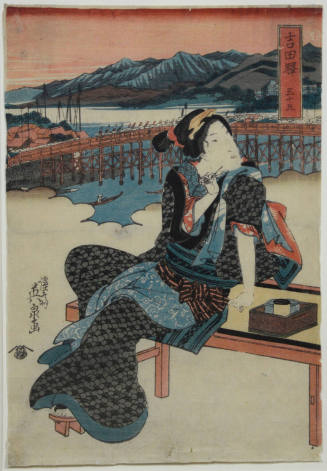
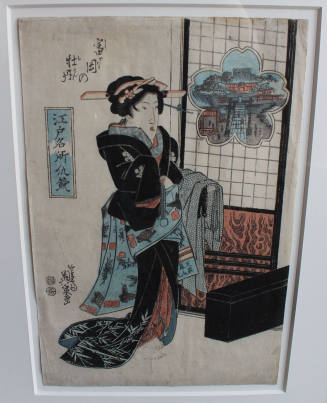
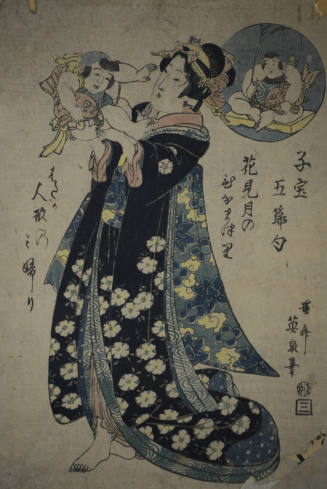
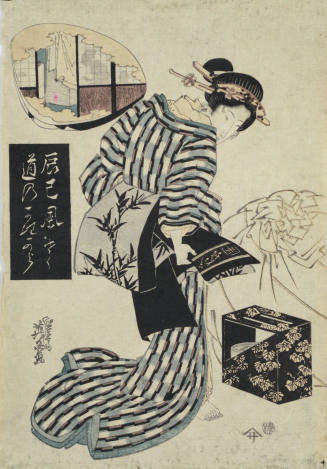
Keisai Eisen (1790–1848), also known as Ikeda Eisen, was a leading ukiyo-e artist of the late Edo period. He specialized in bijin-ga (prints of beautiful women) and is often ranked alongside Kunisada and Kuniyoshi as one of the prominent masters of 19th-century Japanese woodblock prints. His works remain highly valued for their originality, sensuality, and technical execution.
Eisen was born in Edo (today’s Tokyo) in 1790 as Ikeda Zenjiro. His father, a skilled calligrapher and poet, introduced him to the arts at an early age. Eisen began his formal training with Hakkeisai, a master of the Kano school of painting. After his father’s death, he continued his education under Kikugawa Eizan, who was then one of the most influential bijin-ga artists. This background gave Eisen both technical discipline and exposure to the floating world of Edo that would define his later career.
Unlike Kunisada, who focused on kabuki actor prints, and Kuniyoshi, who became famous for warrior scenes, Keisai Eisen devoted much of his career to depicting bijin, or beautiful women. His figures often stand out for their voluptuous proportions and worldly appearance, marking a shift from the more idealized elegance of earlier bijin-ga traditions.
The commercial ukiyo-e market of the 19th century demanded speed and diversity, and Eisen responded with a prolific output. His work spanned a wide range of ukiyo-e genres, including landscapes, surimono, giga (humorous prints), and shunga (erotic art). Although sometimes criticized for overproduction, Eisen’s best works demonstrate high originality and craftsmanship.
SOURCE - https://www.artelino.com/articles/keisai-eisen.asp (Sept, 2024)