John Vincent Bloom
Born in the small town of DeWitt, Iowa, John Bloom moved to Davenport at age 18 to attend St. Ambrose College, after which he enrolled at the Art Institute of Chicago in 1926. His prize-winning painting "The Burial" won first prize at the Iowa State Fair and attracted the attention of Grant Wood, who invited him to join the Stone City Art Colony in 1932. Having exhausted his family's financial resources during his stay at the Art Institute, Bloom had to support himself at Stone City by working as the Colony's custodian. This led to his "meet cute" with Isabel Scherer, who was working on a sculpture when Bloom chided her for making a mess that he would have to clean up. During their marriage, Scherer blossomed as a sculptor, developing a technique for cast concrete that allowed her to build a nationwide business in cast concrete figurines.
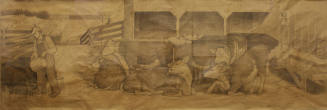
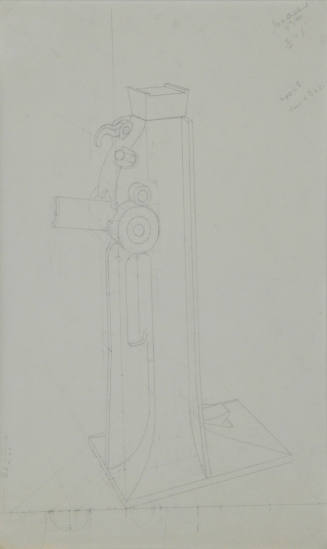
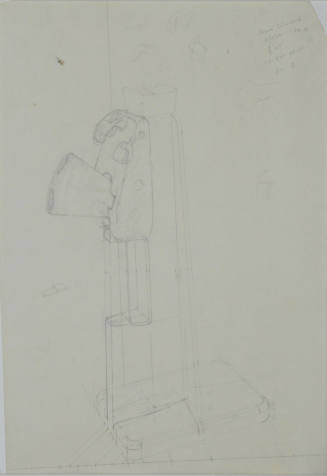
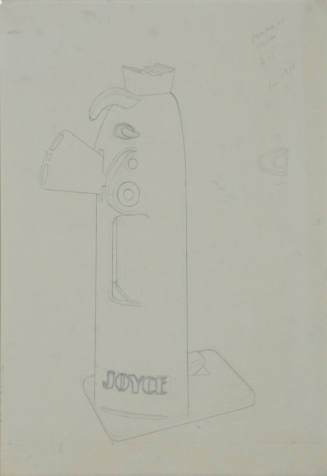
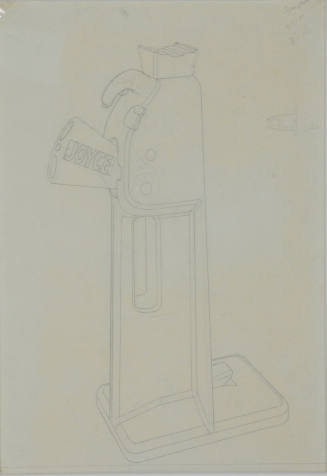
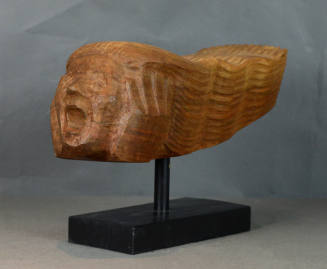
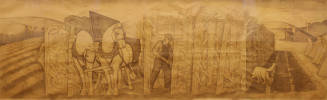
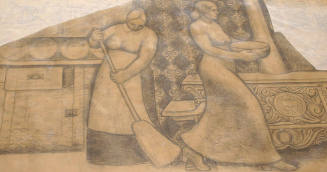
Bloom received commissions for two Post Office murals, both of which show the strong influence that Grant Wood had on his work. To support his growing family, Bloom worked as an industrial designer four days a week, while experimenting with lithography on the weekend. He continued work as an industrial designer through World War II, with employment at the Rock Island Arsenal. Following the War, Bloom had a number of similar jobs. His collected papers at Iowa State University show an amazing range of topics covered by this work. Meanwhile he never ceased to sketch scenes of Davenport and work at wood carving, an activity he had picked up in childhood.
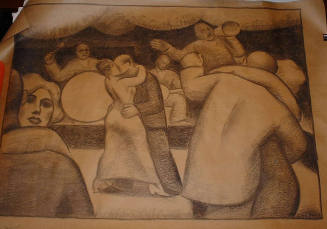
Retiring in 1969, he devoted full time to sketching, often roaming about Davenport in search of interesting subjects. He developed a habit of dropping into David Losasso's gallery Mississippi Fine Art. Losasso expressed an interest in Bloom's art, helped him to print some lithographs from the 1940s, and encouraged him to create new lithographs. This led to a solo exhibit at Mississippi Fine Art and commissions for new murals, typically based on designs that Bloom had developed in the 1930s.
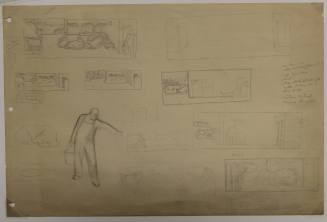
Bloom was a very competent, if not ground-breaking, muralist. His drawings show a fine hand and a wonderful eye for detail and composition. His lifelong interest in wood carving may have helped him create the three-dimensional feeling that his murals project. His work is well-represented in regional museums, and his DeWitt mural holds an honored place in the town's history.
He passed away in 2002, one year after his wife, they are buried together in Mount Calvary Catholic Cemetery.
SOURCE - https://murals.info-ren.org/artist_info.php?artist=John+V.+Bloom (Sept, 2025) & https://www.rcreader.com/art/buried-stories-john-isabel-bloom (Sept, 2025)