John Parker Glick
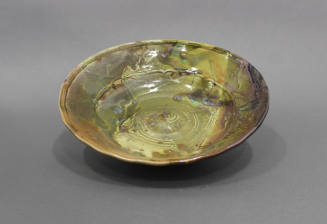
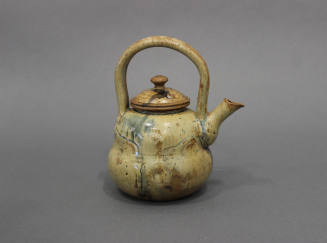
John Glick is known for functional, thrown, stoneware vessels with painterly surfaces. His early work reflected his Cranbrook teacher, Maija Grotell, and is characterized by simple, undecorated stoneware dinner services and functional vessels.Glick founded Plum Tree Pottery in 1964. There he produced a range of functional vessels with sophisticated painterly decoration. The surface is drawn on and painted with slips and glazes, frequently with flower and vine motifs, sometimes built up to form relief or textured underglaze surfaces, always creating the illusion of depth.
Toward the end of the 1960s, his work began to reflect his interest in 18th and 19th-century Japanese art and contemporary Abstract Expressionism. Beginning in the 1990s, in an effort to get larger surfaces, he made landscape-inspired wall panels.
Glick is considered one of the most important functional potters of his time, not only for his body of work but also as an influential teacher and mentor. Glick introduced, to American studio potters, innovative studio practices that have been widely adopted. He worked with studio assistants, initially having them throw the desired forms or assemble the slabs of hand-built forms to his specifications. Glick concentrated on all aspects of the decoration and finishing.
Initially, Glick used a simple bleed through of iron spots, he later developed a catalog of motifs using combinations of wax resist patterns, incised lines, stamped textures, stain, oxides, and glazes, brushed on, dipped, and dripped to create abstract expressionist surface designs. He created tools to do specific jobs, for example extending the sides of wheel-thrown pots with wooden rib supports. Glick gave new life to forgotten tools such as the extruder, first used in the 18th century to produce straps in various profiles for jug, can, and teapot handles. Glick repurposed the extruder to make sections of his slab built forms. Ultimately, Glick repurposed not only traditional potter’s tools but also their functional forms, to make a unique, unpretentious artistic statement.
SOURCE - https://www.themarksproject.org/marks/glick (Sept 2025)