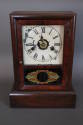
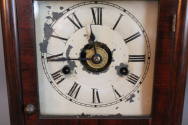
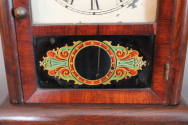
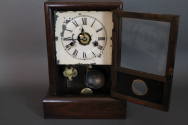
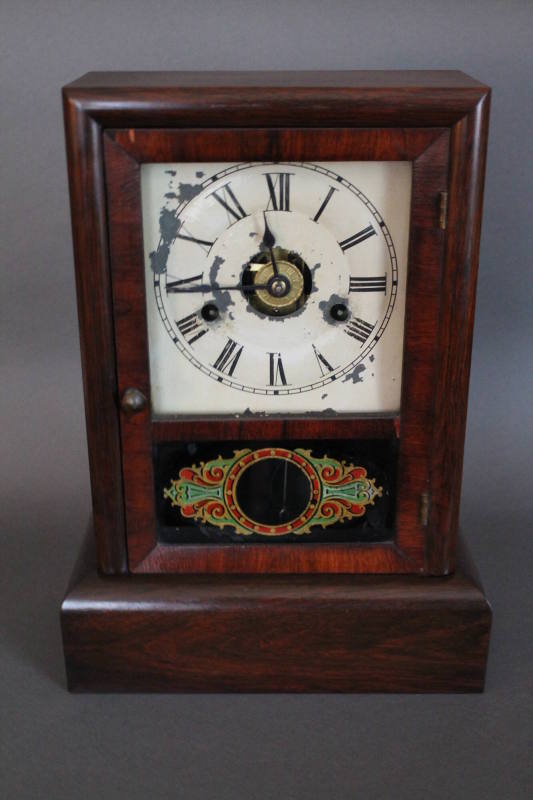
Clock
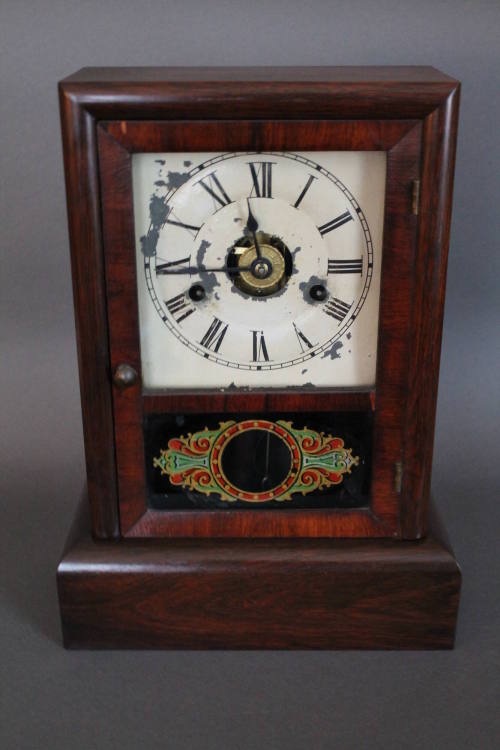
Object NameClock
MediumRosewood and/or Walnut
ClassificationsHousehold, Kitchen, Miscellaneous
Credit LineGift of Marian Daniells. In the Farm House Museum Collection, Farm House Museum, University Museums, Iowa State University, Ames, Iowa.
Object number74.16.40
Status
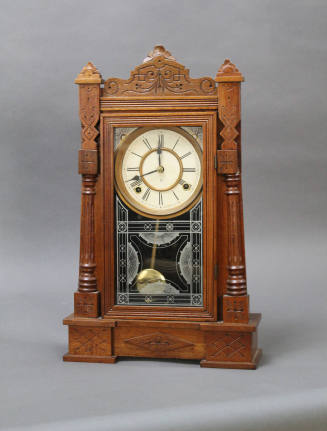
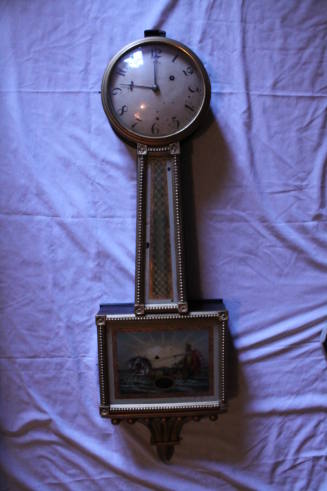
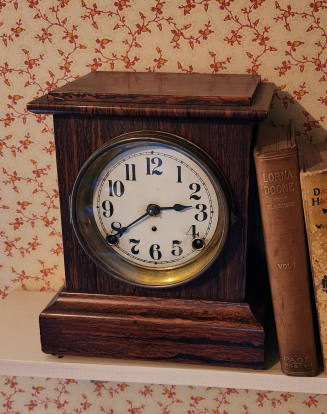
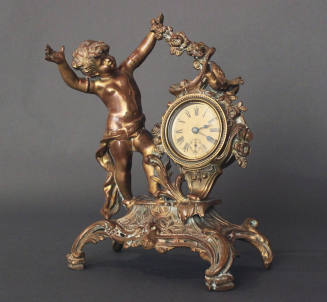
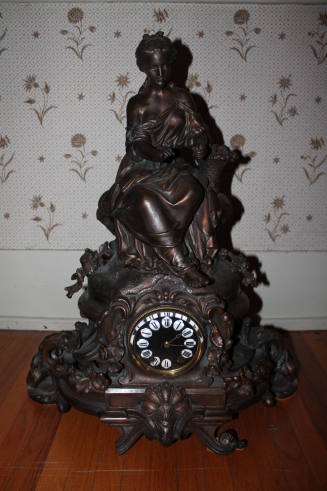
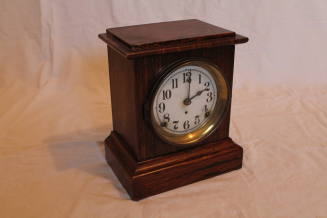
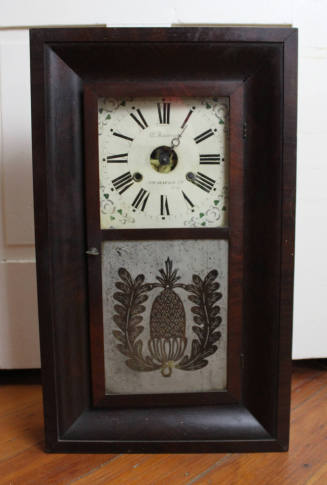
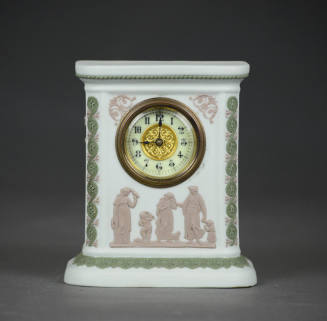
On viewLabel TextOriginating in 18th Century France, mantle clocks were conceived of as both functional timepieces and highly decorative works of art, intended for display in the homes of the nobility. Characterized by elaborate ornamentation and fine craftsmanship, the clocks reflected extreme wealth and an elite spot in society. American mantel clocks evolved from expensive European imports to mass-produced necessities, with Eli Terry and Seth Thomas pioneering affordable wooden movements in the early 1800s, followed by brass, widespread use in the Victorian era (often cast-iron styles mimicking marble), and prominence through brands like Ansonia and Gilbert, becoming symbols of status, technological progress (interchangeable parts), and home decor before wristwatches shifted focus. At a time when many people relied on less precise methods of timekeeping, owning a mantel clock signaled that a household had the means to adopt modern technologies and maintain an orderly domestic life.
https://www.premierclocks.com/blogs/clock-blog/the-history-of-mantel-clocks-and-christmas?srsltid=AfmBOor-OnPO75fG N0fcLam9q76CkudT2LNbc_9krJdE7gGhh0UwpL5x
Locations
- (not entered) Iowa State University, Farm House Museum