
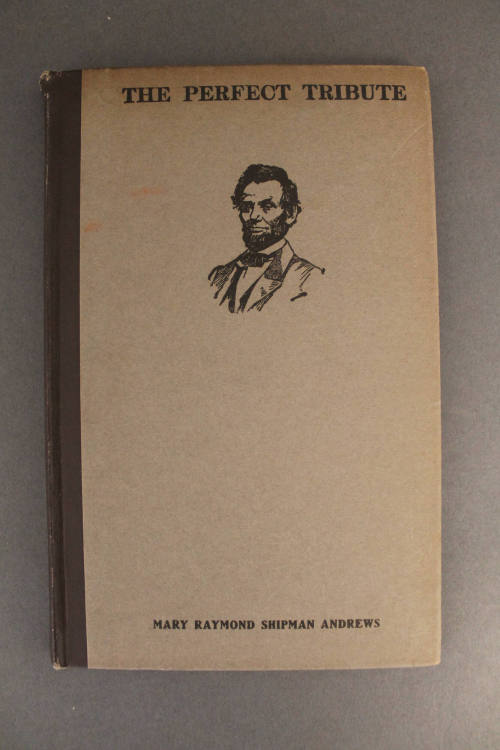
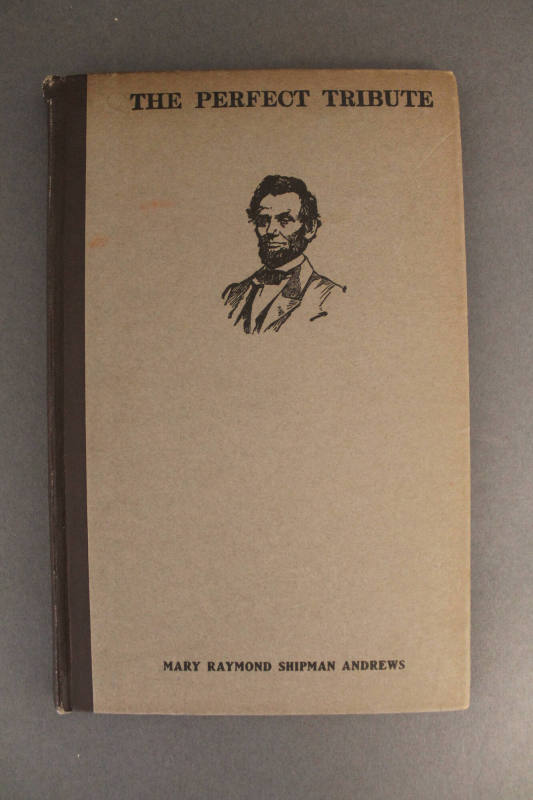
The Perfect Tribute
Object NameBook
Publisher
Charles Scribner's Sons
(American, 1846 - 1978)
Author
Mary Raymond Shipman Andrews
(1860-1936)
Date1913
OriginUSA
MediumPaper
Dimensions7 1/2 × 4 3/4 × 1/8 in. (19.1 × 12.1 × 0.3 cm)
ClassificationsBooks, Manuscripts, Documents, Personal Symbol & Correspondence
Credit LineIn memory of Robert A. Wright, Estyle M. Wright, Mrs. A. L. Wright and Mrs. Ella M. Burke, Carroll, Iowa. In the Farm House Museum Collection, Farm House Museum, University Museums, Iowa State University, Ames, Iowa.
Object number86.5.29
Status
On viewCollections
CultureAmerican
Label TextAbraham Lincoln, president of the United States from 1861 until his assassination in 1865, became one of the most consequential figures in American history. Born in 1809 to a poor farming family in Kentucky, Lincoln taught himself law in Springfield, Illinois, and earned a reputation for integrity and plainspoken honesty. He entered politics as a Whig, serving in the Illinois House of Representatives beginning in 1834, and later completed a single term in the U.S. House of Representatives from 1847 to 1849 before returning to his private legal practice. Lincoln reentered politics in 1858 as a member of the newly formed Republican Party and challenged incumbent Illinois senator Stephen A. Douglas. Although he lost the election, the Lincoln–Douglas Debates, centered on the expansion of slavery into western territories, brought him national attention. Northerners admired him, Southerners reviled him, and he won the presidential election of 1860 on an antislavery platform. His victory triggered a wave of Southern secession, and by the time he took office in March 1861, seven states had already left the Union, pushing the nation toward war.
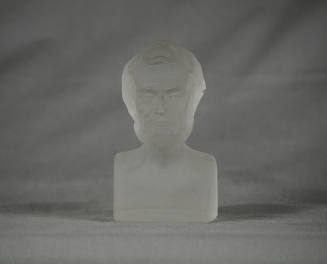
For four years, Lincoln led the nation through the Civil War, preserved the Union, and set the country on the path to abolishing slavery with his Emancipation Proclamation. Just days after the war ended in April 1865, Southern sympathizer John Wilkes Booth assassinated him, transforming Lincoln into a martyr for the Union cause. In the decades since his death, Americans have come to see Lincoln as a symbol of leadership during national crisis. His role in reuniting the country, ending slavery, and defending freedom, combined with his eloquence and tragic death, has inspired generations to memorialize “The Great Emancipator.” People honor him through monumental architecture like the Lincoln Memorial and intimate objects such as books or paperweights, keeping Abraham Lincoln an enduring icon of the American story.
https://www.battlefields.org/learn/biographies/abraham-lincoln https://museum.lincolncollege.edu/discover/alccd/profile/abraham-lincoln-character-qualities
Locations
- (not entered) Iowa State University, Farm House Museum
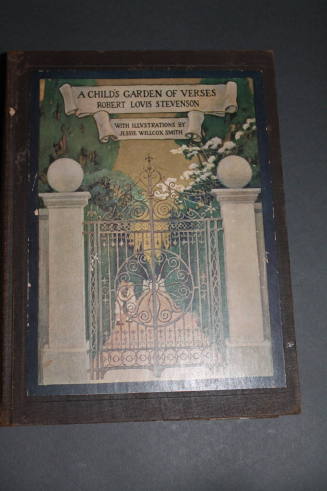
Object Name: Book
Charles Scribner's Sons
1875
Object number: 83.7.1

Object Name: Gibson Book Volume I
Charles Scribner's Sons
1906
Object number: 85.24.1
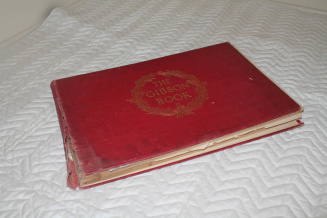
Object Name: Book
Charles Scribner's Sons
1906
Object number: 85.24.2
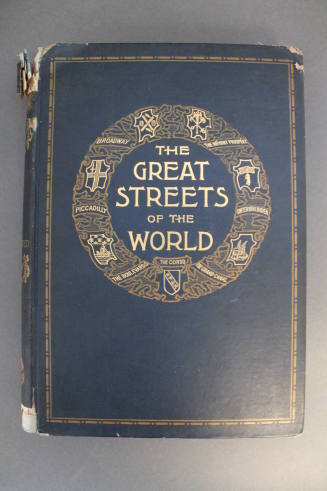
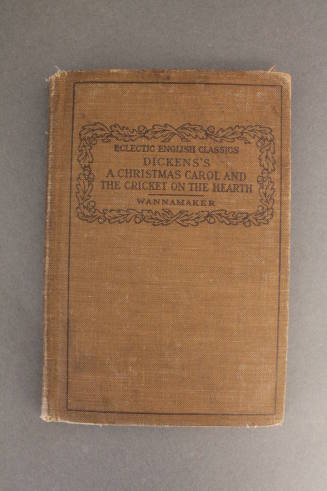
Object Name: Book
Charles Dickens
Object number: 86.13.18
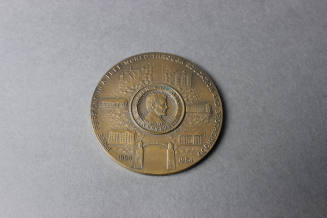
Object Name: Medallion
Whitehead & Hoag
1954
Object number: UM2019.293