
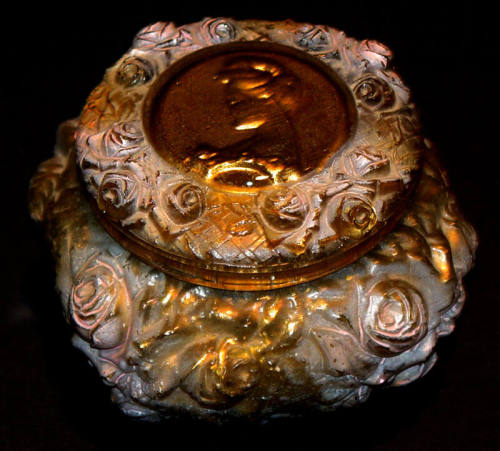
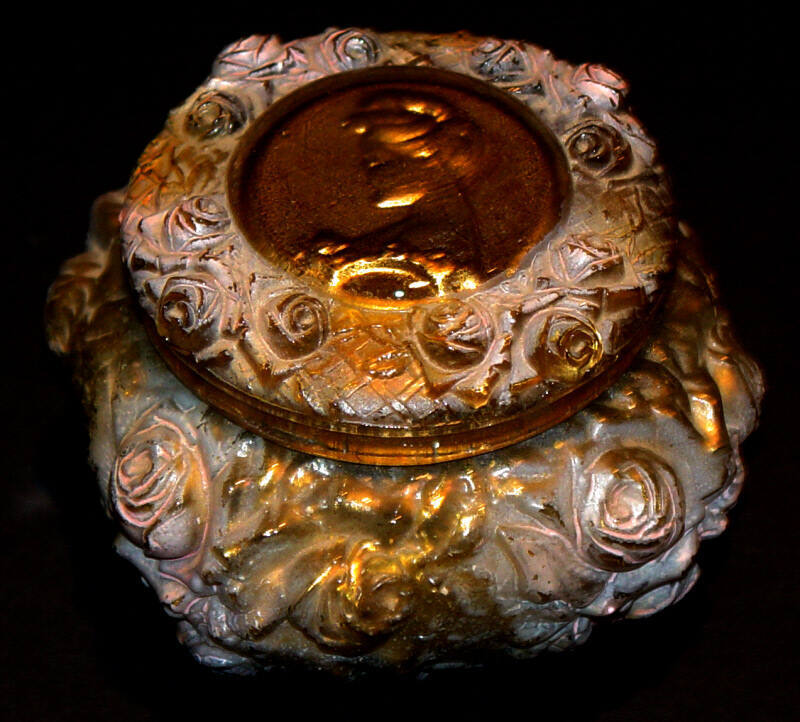
Gibson Girl pattern
Object NamePowder Jar
Manufacturer
Dugan Glass Company
(American (Indiana, PA), 1904 - 1931)
Date1908-1918
OriginUSA
MediumNon-flint clear pressed glass, applied gold, white and pink
Dimensions3 x 4 x 3 in. (7.6 x 10.2 x 7.6 cm)
ClassificationsDecorative Arts, Glass
Credit LineGift of Quester Chapter Neta Snook # 882. In the Iowa Quester Glass Collection, Brunnier Art Museum, University Museums, Iowa State University, Ames, Iowa.
Object numberUM98.49ab
Status
On viewCollections
CultureAmerican
Label TextFamed American illustrator Charles Dana Gibson created the “Gibson Girl” in the 1890s. Gibson designed her to embody the spirit of the “New Woman,” and she quickly became a cultural icon during a period of social transformation in the United States. Through his illustrations, Gibson promoted a vision of modern femininity that encouraged young women to pursue higher education, romantic agency, physical health, and personal independence. Combining elegance and confidence, the “Gibson Girl” gained popularity alongside the growing visibility of women in American society. She not only captured the aspirations of a generation of young women but also paved the way for more radical feminist movements in the 20th century.
Returning from studying in Paris in 1895, Charles Gilbert settled in New York where he embarked on an active career as an illustrator of books, magazines, posters and calendars like Armour’s. Like Gibson, Gilbert’s illustrations were frequently published in Scribner’s, Harper’s, Atlantic Monthly and other leading magazines.
Harrison Fisher was born in Brooklyn, New York City and began to draw at an early age. Both his father and his grandfather were artists. Fisher spent much of his youth in San Francisco, and studied at the San Francisco Art Association. In 1898, he moved back to New York and began his career as a newspaper and magazine illustrator. He became known particularly for his drawings of women, his “American Girl,” which won him acclaim as the successor of Charles Dana Gibson.
https://www.loc.gov/exhibits/gibson-girls-america/overview.html https://www.illustrationhistory.org/artists/harrison-fisher
MarkingsEmbossed "D" on bottom of jar.
Locations
- (not entered) Iowa State University, Farm House Museum, 2nd Floor, SE Bedroom
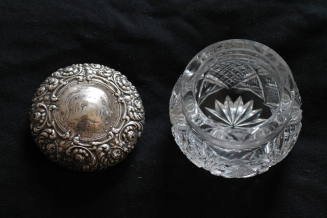
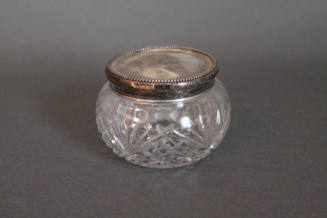
Object Name: Powder Jar and lid
Theodore W. Foster & Brothers Co.
c. 1925
Object number: 86.270ab
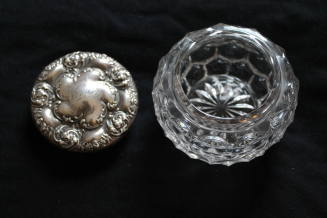
Object Name: Powder Jar and lid
Bakewell, Pears & Company
1870s
Object number: um87.35ab
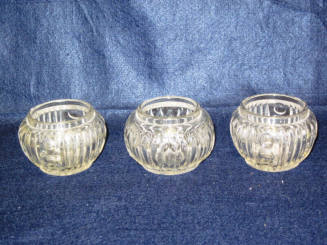
Object Name: Powder Jar without Lids
Cooperative Flint Glass Co.
1899
Object number: um96.142abc
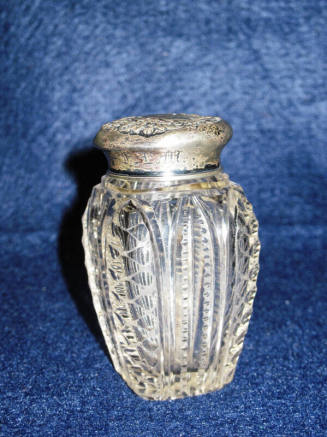
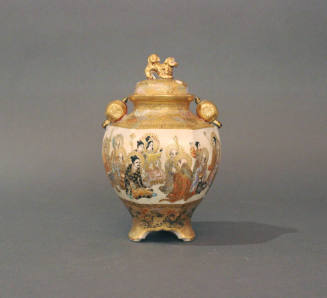
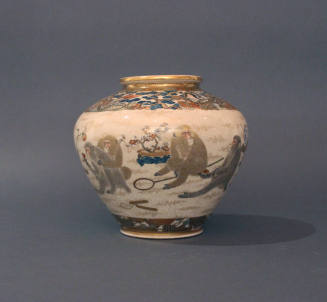

Object Name: Candy Jar
A. H. Heisey and Co.
1915-1932
Object number: UM97.149ab
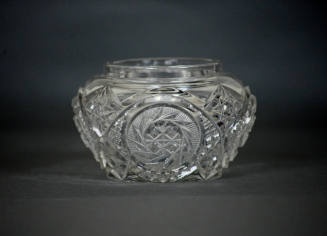
Object Name: Dresser Jar with Lid
Fostoria Glass Company
1906-1915
Object number: UM2018.151ab