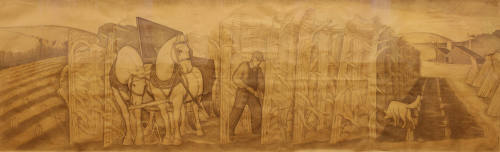
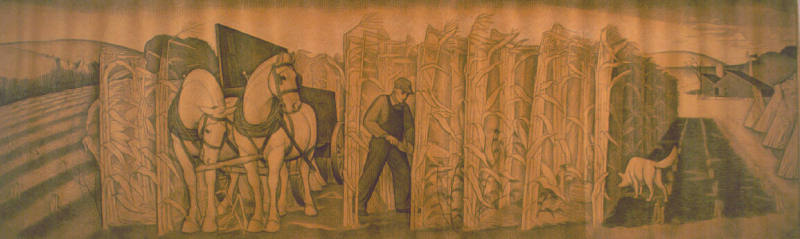
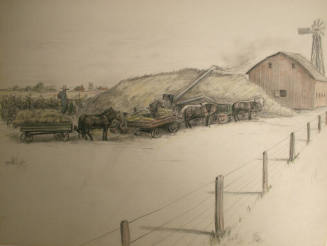
Shucking Corn
Artist / Maker
John Vincent Bloom
(American, 1906 - 2002)
Date1938
MediumPencil and colored pencil on brown paper
Dimensions48 x 160 in. (121.9 x 406.4 cm)
ClassificationsDrawings
Credit LinePurchased with funds provided from the Estate of Ann and George Wilhelm, the Gerald and Karen Kolschowsky Foundation, and Iowa State University’s Business and Finance Division. In the permanent collection, University Museums, Iowa State University, Ames, Iowa.
Object numberUM2003.1
Status
Not on viewCollections
CultureAmerican
Label TextJohn Vincent Bloom was among the most gifted Iowa artists of his generation. Born in DeWitt, he studied for several years in the late 1920s at the Art Institute of Chicago where the Modern style made a deep impact upon him as he learned to analyze form down to its fundamental components.
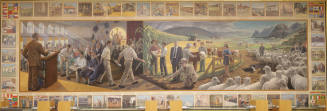
With the Crash of 1929, Bloom left the Art Institute, where he had been teaching classes in addition to finishing his own schooling, and went home to DeWitt. He was able to attend both sessions of Grant Wood’s Stone City Art Colony because he was given a job as groundskeeper, and when the New Deal’s Public Works of Art Project began in late 1933, Wood (who had been appointed director for Iowa) again hired him. Bloom’s superb skills in drawing and design made him especially important in the painting of the large mural cycle for the Iowa State University library, When Tillage Begins, Other Arts Will Follow.
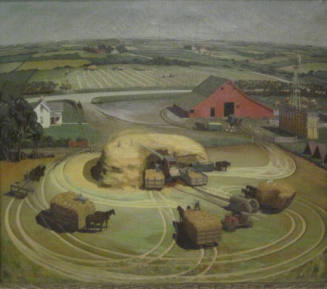
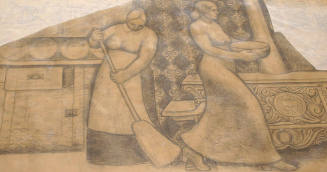
The New Deal art programs gave Bloom commissions for murals in the post offices of DeWitt and Tipton, and for both paintings he chose the theme of rural life and labor. He had embraced Wood’s Regionalist philosophy of using one’s own surroundings as the source of inspiration and he was easily able to translate his version of Iowa into paintings designed to have a broad public appeal. Both the Tipton and the DeWitt murals document farm life in accurate detail, but they also retain that simplicity and geometric precision associated with the abstraction of Modernism that Bloom had mastered in the 1920s.
The two full-scale cartoons for the DeWitt and Tipton murals were found rolled up in Bloom’s attic after his death. The federal agencies that funded such commissions required that artists submit specific and detailed studies of what they planned to paint, including preparatory studies and as well as a fully detailed drawing of the exact size of the actual wall. Bloom would have used the University Museums’ cartoons to transfer his design directly onto the walls of the post offices in DeWitt and Tipton. The survival of drawings on this scale is rare.
-Lea Rosson DeLong from Artists in Iowa, University Museums, 2019
PeriodAmerican Regionalism
Locations
- (not entered) Iowa State University, Christian Petersen Art Museum
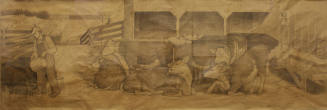
Object Name: Cartoon Study for the Tipton Post Office Mural
John Vincent Bloom
1939
Object number: UM2003.2
Object Name: Drawing
John Vincent Bloom
1939
Object number: UM2015.126
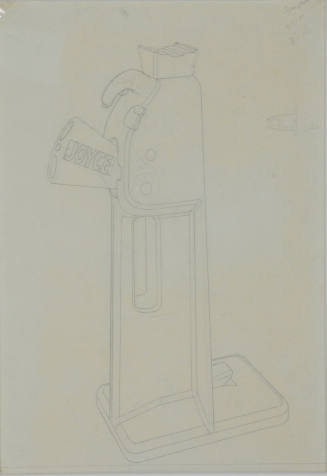
Object Name: Drawing
John Vincent Bloom
6/9/1940
Object number: UM2005.362
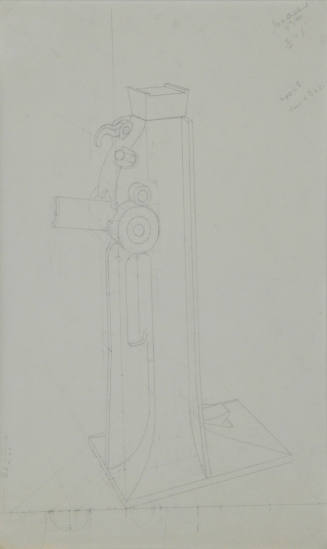
Object Name: Drawing
John Vincent Bloom
5/7/1940
Object number: UM2005.363
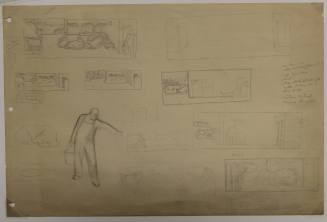
Object Name: Drawings
John Vincent Bloom
1939
Object number: UM2005.366
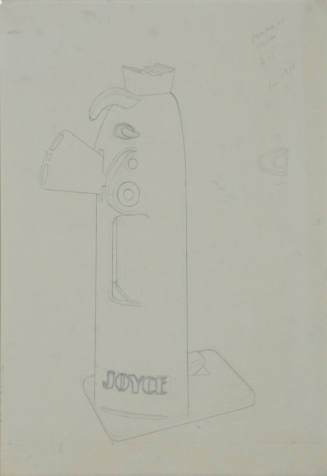
Object Name: Drawing
John Vincent Bloom
5/11/1940
Object number: UM2005.364
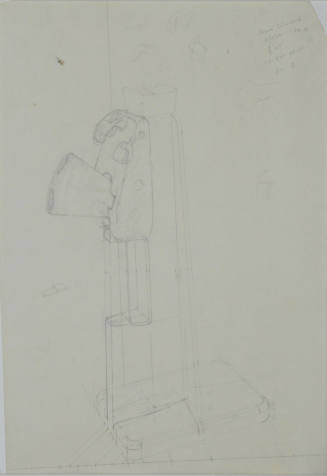
Object Name: Drawing
John Vincent Bloom
5/8/1940
Object number: UM2005.365