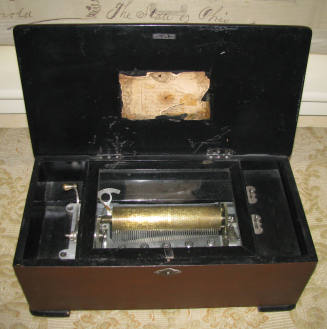


Melodeon
Object NameMelodeon
Manufacturer
Taylor and Farley
(American (Worcester, MA), 1855 - 1885)
Date1860
OriginUSA
MediumWood, ivory, ebony
Dimensions31 1/4 × 47 1/2 × 38 3/4 in. with top up (79.4 × 120.7 × 98.4 cm)
ClassificationsMusical Instruments
Credit LineGift of Mr. & Mrs. Farwell T. Brown. In the Farm House Museum Collection, Farm House Museum, University Museums, Iowa State University, Ames, Iowa.
Object number78.3.1
Status
On viewCollections
CultureAmerican
Label TextFrom the University Museums Collections Handbook, vol. 2, 2025:
The melodeon is a small, portable reed organ that played an essential role in 19th century entertainment. Unlike larger, more stationary pipe organs, this instrument’s compact size and portability allowed music to be enjoyed in a variety of settings, from intimate family parlors to lively town celebrations. The melodeon produces sound through a system of suction-based airflow. As the musician pumps the foot pedal bellows, air is drawn in and directed over metal reeds, which vibrate to create musical tones. This differs from traditional pipe organs, which use pressurized air. The melodeon’s distinct, warm sound made it a favorite for home entertainment and was commonly played while friends and family gathered to sing popular songs and hymns.
Manufacturer Taylor & Farley exemplified the craftsmanship of these instruments. Simeon Taylor and John A. Farley formed the Worcester, Massachusetts-based company in the mid-1850s. Their company saw significant growth throughout the 1860s, producing high-quality melodeons and other reed organs that gained widespread popularity. Despite its decline in commercial production, the melodeon remains an important artifact of 19th century musical culture that is highlighted in the Farm House Museum’s parlor. The melodeon was originally in the farmhouse of Fidelia Submit Brown Gardner, Evans Mills, NY. After her death, in 1935, the melodeon became the property of her nephew Harry and made its way to Ames, IA. After the death of Harry, the melodeon was in the Kellogg Ave. home of his son Farwell T. Brown until 1978 when the Brown family donated it to the museum.
MarkingsTAYLOR + FARLEY WORCHESTER, MASS.
Locations
- (not entered) Iowa State University, Farm House Museum, Parlor
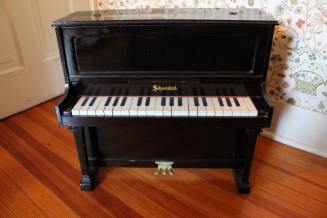
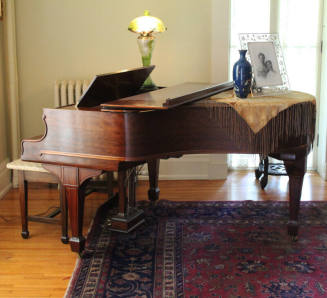
Object Name: Toy piano / Salesman's sample
Schoenhut Co.
1925
Object number: 77.25.3

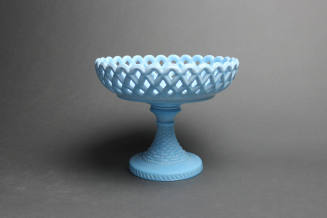
Object Name: Sauce Dish
Challinor, Taylor and Co.
Object number: UM2014.147
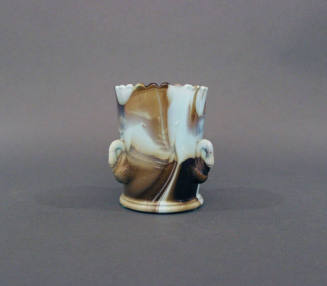
Object Name: Spoon Holder (Spooner)
Challinor, Taylor and Co.
c. 1890
Object number: 3.15.72
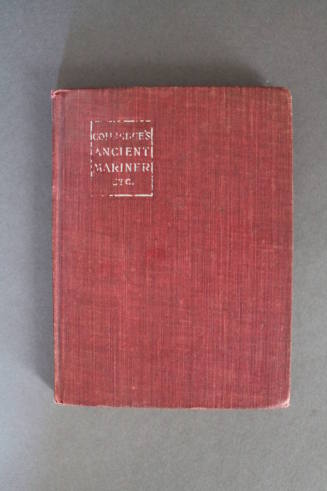
Object Name: Book
Samuel Taylor Coleridge
Object number: 86.186
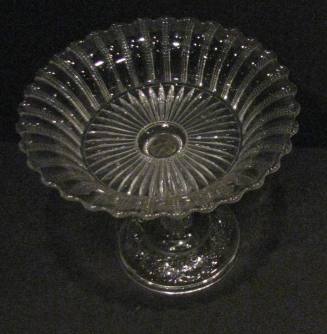
Object Name: Compote
Challinor, Taylor and Co.
1886
Object number: UM2011.453