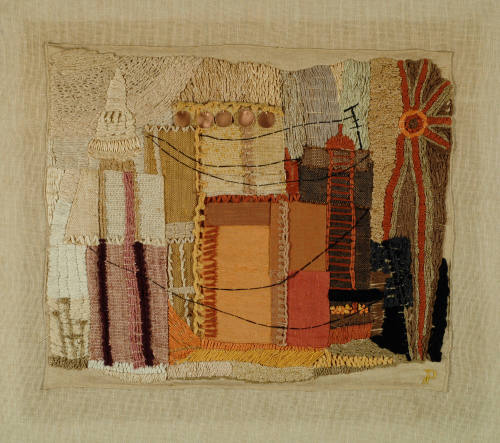
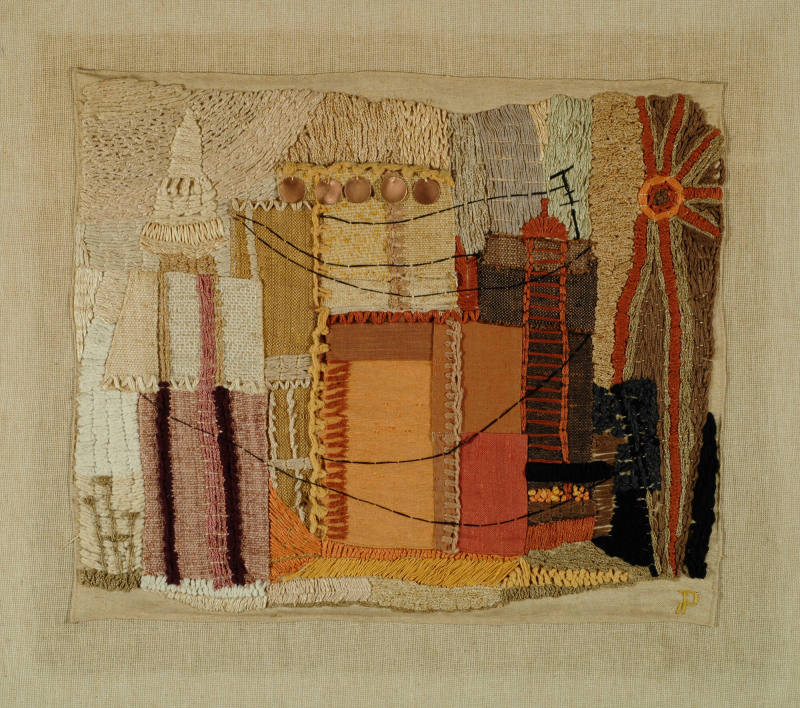
9th Avenue
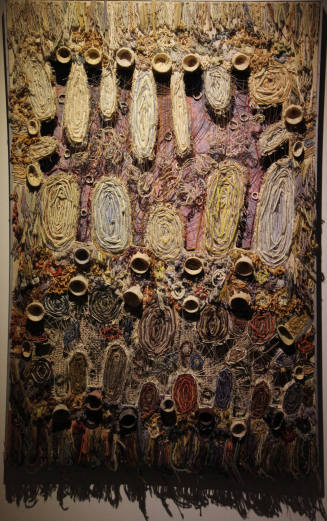
Object NameTextile Sculpture
Artist / Maker
Priscilla Kepner Sage
(American, b. 1936)
Date1959
MediumFabric, yarn, and found objects. Machine and hand stitched fabric and threads
Dimensions28 x 32 in. (71.1 x 81.3 cm)
ClassificationsSculpture
Credit LineGift of the artist and Charles Sage. In the Art on Campus Collection, University Museums, Iowa State University, Ames, Iowa.
Object numberU2012.358
Status
Not on viewCollections
CultureAmerican
Label TextFrom the University Museums Collections Handbook, vol. 2, 2025:
Priscilla Sage was born in Pennsylvania to a family filled with female artists who stitched quilts and made other objects to beautify their lives. This early introduction to fabric arts, and the support of her artistic interests by her family, led to a lifelong career creating art and teaching generations of students to develop their own skills. 9th Avenue is one of her earliest textile sculptures. After her family moved to New Jersey, Sage spent many breaks traveling into New York City where she experienced the art of some of the most prominent Abstract Expressionists, but also the early female textile artists who were creating exciting experimental sculptures in fiber. Using a collage of fabrics, yarns, and found objects, Sage built a textured surface with a dimensionality unlike previous drawings and paintings. The imagery was taken from her bus rides into the Port Authority Terminal and Ninth Avenue in New York City. Sage effectively used fabric to convey the feeling of seeing the unique patchwork of tenement buildings with varying heights and architectural styles that are found on the street. This was when Sage fell in love with fabric art as she felt at home with the material and the ability of fabric to express her ideas. Sage would go on to innovate greatly within textile sculpture and explore new materials and methods for much of her long career.
_________________________________________
Label #2: In 1959, Priscilla created a fabric collage, 9th Avenue, of the tenement building she saw as she entered Manhattan on the bus. Instead of painting this cityscape, she combined fabrics, found objects and thread to create a complex composition of geometric forms and patterns. I wonder if she realized what an innovative gesture that work was for its time? Threads of her Pennsylvania childhood seem to come to the surface merging with her embrace of the city, the innovative methods of Lowenfeld, and her experiences as a painter. After this pivotal point in her development as an artist, nothing is the same again.
PeriodMid-Century
Locations
- (not entered) Iowa State University, Brunnier Main Storage
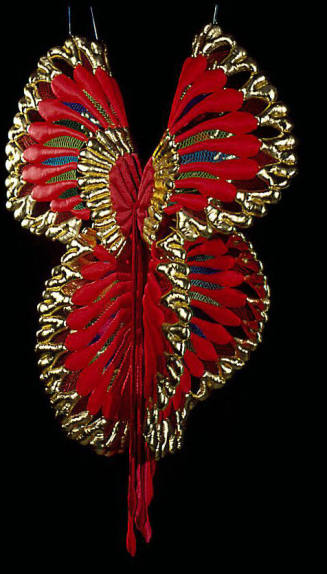
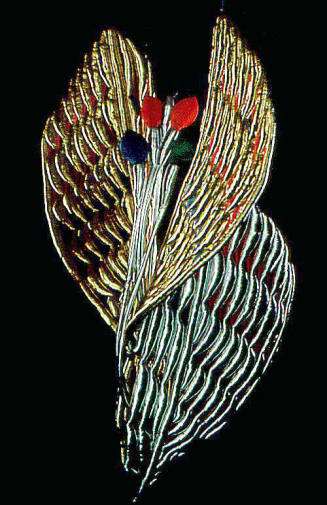
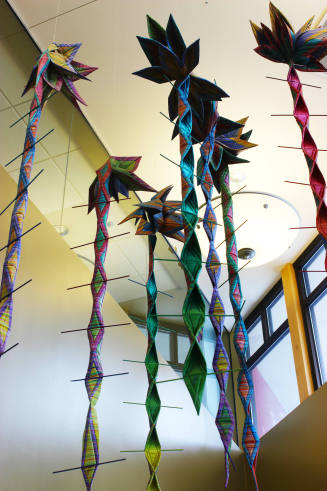
Object Name: Textile Installation
Priscilla Kepner Sage
2007
Object number: U2007.69